The Complete First-Timer's Guide to Luxury Cruising
February 2026
- Home
- >
- The Reading Deck
- >
- The Complete First-Timer's Guide to Luxury Cruising
Choosing the Right Luxury Cruise Line
This is the single most important decision you’ll make, and it’s worth getting right. Luxury cruise lines are not interchangeable. Each has a distinct personality, and the one that suits your best friend might not suit you at all.
Here’s a broad overview of the main luxury and ultra-luxury lines to help you narrow it down:
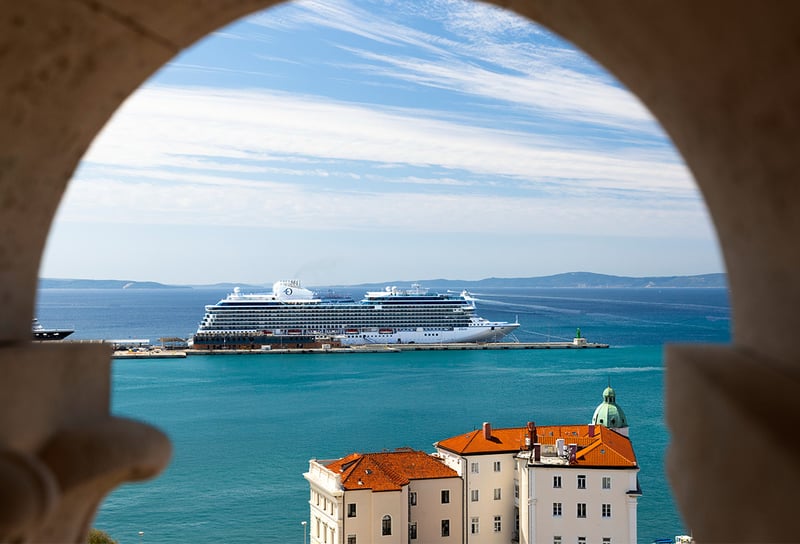
Regent Seven Seas Cruises – The most genuinely all-inclusive line afloat. Your fare covers flights, excursions, drinks, dining, Wi-Fi, gratuities, and even a pre-cruise hotel stay on certain voyages. The ships are spacious and elegant, the service is polished, and you won’t spend a penny onboard unless you actively choose to. If the idea of never reaching for your wallet appeals, Regent is hard to beat. Ships carry around 490 to 750 guests.
Silversea – Italian-owned, with a fleet that ranges from intimate 296-guest ships to the larger Nova-class vessels carrying around 728. Silversea has a cosmopolitan, slightly European feel; you’ll hear several languages in the bar, and the itineraries tend to be more adventurous, including expedition ships that visit Antarctica, the Galápagos, and the Arctic. Butler service comes as standard in every suite category. All-inclusive, with drinks, dining, and gratuities covered. View Silversea deals.
Seabourn – Intimate ships carrying 450 to 600 guests, with an emphasis on understated elegance and exceptional service. Seabourn has a reputation for having one of the highest crew-to-guest ratios in the industry, and it shows, staff remember your name, your drink, and your breakfast preferences by day two. The onboard atmosphere is relaxed and sociable, and the Ventures by Seabourn excursion programme (kayaking, snorkelling, Zodiac cruising) is excellent if you like active exploration. All-inclusive.
Oceania Cruises – Technically “upper-premium” rather than ultra-luxury, but we include Oceania here because the onboard experience, particularly the food, rivals lines twice the price. Oceania’s dining is exceptional, with menus crafted under the guidance of Jacques Pépin. Ships carry around 670 to 1,200 guests. As of 2026, Oceania has moved to an adults-only policy across the fleet. The fare includes flights, gratuities, Wi-Fi, and speciality dining, though premium drinks carry a modest supplement unless you add the drinks package. Browse Oceania deals.
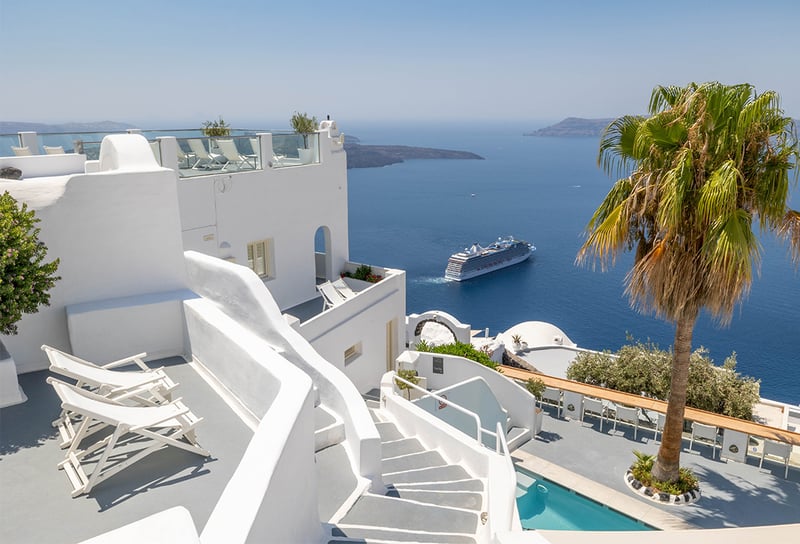
Explora Journeys – The newest entrant, from the MSC Group. Explora launched in 2023 and is positioning itself as a modern, design-forward luxury line with a younger energy. The ships are beautiful, the suites are enormous, and the onboard vibe is more contemporary than traditional, think Aman resorts at sea. All-inclusive, with several restaurants, premium drinks, and a genuinely impressive spa. Still finding its feet in the market, but worth watching.
Cunard (Grill Suites) Cunard isn’t a luxury line in the traditional sense, but if you book a Princess Grill or Queens Grill suite you’ll experience a genuine ship-within-a-ship luxury product. You get your own dedicated restaurant, a private lounge, a concierge, priority embarkation, and the best suites on the ship, all wrapped in Cunard’s unique blend of maritime heritage and formal elegance. It’s a different flavour of luxury, but a very appealing one. View Cunard deals.
Our advice?
Don’t overthink it on your first voyage. Pick a cruise line whose personality resonates with you, choose an itinerary that excites you, and go. You’ll learn more from one sailing than from six months of reading reviews online.
Understanding Cabin Types and Suites
On a luxury cruise line, your accommodation is called a “suite” rather than a “cabin”, and on most lines, every category comes with a balcony (or “veranda”, as the cruise lines prefer to call it). This is one of the fundamental differences between luxury and mainstream cruising: you won’t find windowless inside cabins on Regent or Silversea.
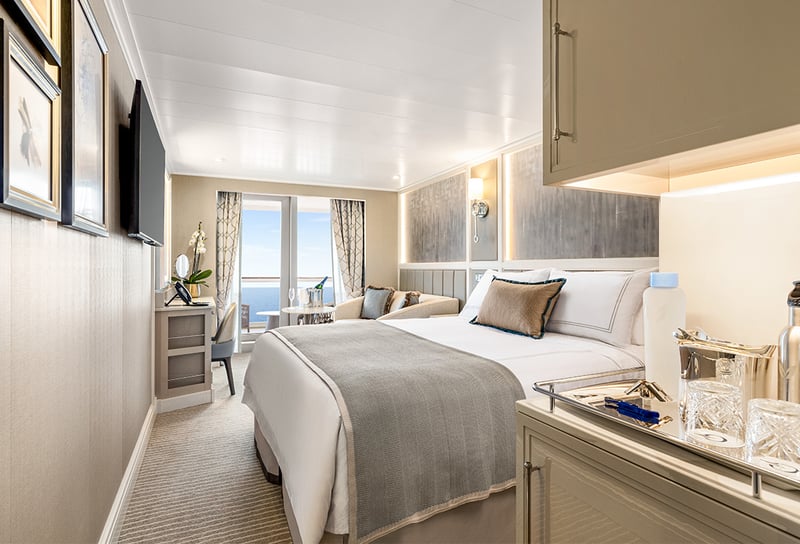
Here’s how the suite hierarchy generally works, from entry-level to the top:
Veranda Suite – The starting point on most luxury lines. A comfortable room with a sitting area, a proper bed (not bunks), a bathroom with quality toiletries, and a private balcony. On Silversea, this is around 30 to 35 square metres; on Regent, it’s closer to 28 to 32 square metres. Perfectly liveable for a week or two.
Superior / Deluxe Veranda Suite – A step up in size, sometimes with a slightly larger balcony or a better position on the ship (higher deck, midship for less motion). The room layout is similar but you get a bit more breathing room.
Penthouse Suite – Now we’re talking. Penthouse suites on luxury lines are genuinely spacious, typically 45 to 60 square metres, with a separate living area, a walk-in wardrobe, a marble bathroom, and often butler service. On Regent, Penthouse guests and above get a dedicated butler who’ll unpack your luggage, arrange in-suite dining, book your restaurants and excursions, and generally handle anything you can’t be bothered to do yourself.
Owner’s Suite / Grand Suite / Master Suite – The flagships. These are genuine apartments at sea, 100 square metres and upwards, with multiple rooms, dining tables, and balconies you could host a cocktail party on. Regent’s Regent Suite on Seven Seas Splendor, for instance, spans over 400 square metres. These are special-occasion suites, and they’re priced accordingly.
Our honest recommendation
For a first luxury cruise, our honest recommendation is to start with a Veranda Suite and spend the money you’ve saved on a longer itinerary. The difference in onboard experience between a Veranda and a Penthouse is less significant than you’d think; you’ll eat in the same restaurants, enjoy the same entertainment, and receive the same level of service. The ship is your hotel; the suite is where you sleep. You’ll spend most of your time everywhere else.
What "All-Inclusive" Actually Means
This is where luxury cruising really earns its price tag, and it’s also where first-timers are most pleasantly surprised.
On a mainstream cruise, the headline fare covers your cabin and your meals in the main dining room. Everything else, drinks, speciality restaurants, Wi-Fi, gratuities, excursions, is extra. By the end of a week, the onboard bill can be eye-watering.

On a luxury cruise, most of that is included from the start. Here’s what you can typically expect:
Included on virtually all luxury lines: All dining (including speciality restaurants with no surcharge), premium wines, spirits, and cocktails throughout the ship, soft drinks, speciality coffees, gratuities for all staff, Wi-Fi, and 24-hour room service from the full restaurant menus.
Included on some lines (varies): Return flights and transfers (Regent, Oceania, and sometimes Silversea), unlimited shore excursions (Regent), a pre-cruise hotel night (Regent on selected voyages), laundry and pressing (Silversea suite categories and above), and expedition gear on expedition sailings.
Not usually included, even on luxury: Spa treatments, premium or rare vintages from the wine list, private shore excursions, and the onboard shop. Some lines also charge a supplement for a small number of “signature” dining experiences.
The practical upshot of genuine all-inclusivity is that you can go an entire cruise without signing a single bill. Order a cocktail at the pool bar? Included. Fancy the wagyu at the Japanese restaurant? Walk in, no reservation needed, no charge. Want a bottle of champagne sent to your suite before dinner? Call your butler. It’s a remarkably liberating way to travel, and it’s the main reason people who try luxury cruising rarely go back to mainstream.
One word of advice
Make sure you understand what’s included on your specific cruise line before you board. “All-inclusive” means different things to different lines. Regent’s inclusion of flights and unlimited excursions, for example, is genuinely unique, and when you factor those in, the price gap between Regent and a “cheaper” line often narrows considerably.
Embarkation Day: What to Expect
Your first embarkation day can feel like a lot. It doesn’t need to be. Here’s what happens, step by step.
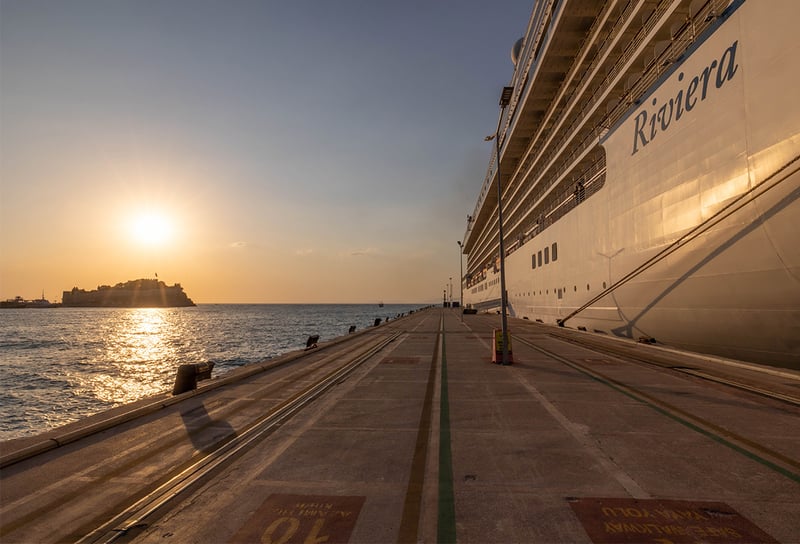
Embarkation Day: What to Expect
Arrival at the port. Most luxury lines offer a VIP check-in process that’s far smoother than the mainstream experience. If your flights and transfers are included, you’ll be met at the airport and driven to the ship, no queuing for taxis. If you’re driving (from Southampton, say), follow the signs to the cruise terminal, hand your luggage to the porters at the kerb, and head inside.
Check-in. You’ll have completed most of this online before you arrive, passport details, health forms, and payment information. At the terminal, it’s a brief document check, a security screening (similar to an airport), and then you’re walking up the gangway. On luxury lines, the whole process typically takes 15 to 20 minutes. Some lines offer a glass of champagne as you board. Accept it.
Your suite. It may or may not be ready when you board, depending on what time you arrive. If it’s not, leave your hand luggage at the reception area and head to a restaurant for lunch. Your checked luggage will be delivered to your suite during the afternoon, usually by 3pm or so.
The muster drill. This is a mandatory safety briefing required by maritime law. Don’t skip it. On most modern ships, it’s now done via your phone or the in-suite TV rather than the old-fashioned “everyone stand by the lifeboats” assembly. It takes five minutes and you only have to do it once.
Sail-away. Find a spot on deck, drink in hand, and watch the port slip away. This is the moment it hits you. There’s nothing quite like it.
Don’t try to do everything on day one. The ship isn’t going anywhere without you. Explore at your own pace, eat something, have a nap if you need one, and ease into it. You’ve got all week.
Dress Codes: What to Wear
This is the question that causes more pre-cruise anxiety than any other, and the answer is simpler than you think.
The luxury cruise industry has relaxed significantly over the past decade. The days of mandatory black-tie every other evening are largely behind us. Most luxury lines now describe their dress code as “elegant casual” or “country club casual”, which in practice means:
During the day: Anything comfortable and clean. Shorts, polo shirts, sundresses, swimwear by the pool. Think upscale resort. The only hard rule is no swimwear in the restaurants.
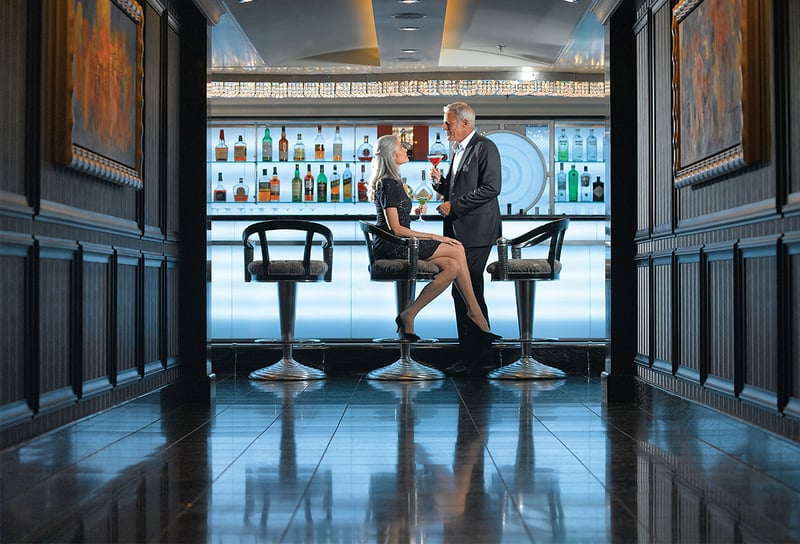
In the evening: Smart casual at minimum, chinos or tailored trousers with a collared shirt for men, a nice dress or smart trousers and a top for women. You don’t need to overthink it. If you’d wear it to a good restaurant in London, you’ll be fine.
Formal nights: Most luxury lines have one or two “gala” or “dressy” evenings per week, typically the Captain’s Welcome Dinner and the farewell evening. A dark suit and tie for men, a cocktail dress or evening trousers for women. A dinner jacket (tuxedo) is welcome but absolutely not required, you’ll see plenty of people in smart suits.
Cunard is the exception. If you’re sailing Cunard, formal nights mean proper formal, dinner jacket, long dresses, the works. It’s part of the experience and most guests love it, but be prepared.
Here's the thing nobody tells you:
Nobody is going to refuse you entry to the dining room if you’re slightly underdressed. The staff are far too polished for that. But you’ll feel more comfortable if you’ve packed appropriately, and there’s something genuinely lovely about dressing up for dinner when you don’t have to cook it.
Packing for a Luxury Cruise
The beauty of a cruise is that you unpack once and visit a dozen places. The downside is that you need to pack for a dozen places in one suitcase.
Here’s what we’d suggest:
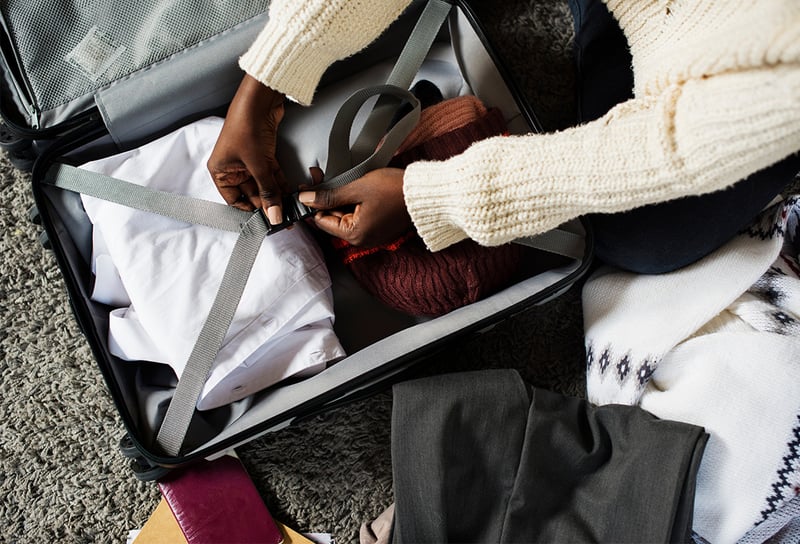
Essentials: Passport (check it’s valid for at least six months beyond your return date), any necessary visas, travel insurance documents, and any prescription medication in its original packaging. Bring printed copies of your booking confirmation and travel documents, phones run out of battery at the worst possible moment.
Daywear: Lightweight layers are your friend. Temperatures can vary wildly between a Mediterranean port in July and an air-conditioned restaurant. Pack a mix of shorts, smart-casual trousers, t-shirts, and a couple of light jumpers or cardigans. A good pair of walking shoes is non-negotiable for excursions, cobblestones are unforgiving.
Evening wear: Two or three outfits that you’d wear to a nice dinner out, plus one “dressy” option for formal night. Women can get a lot of mileage from a versatile black dress and a few different accessories.
Swimwear: At least two sets, so one can dry while you wear the other. A cover-up for walking between the pool and your suite.
A light jacket or pashmina: Essential for sea days. The wind on an upper deck can be surprisingly bracing, even in the Mediterranean. Also useful for overly enthusiastic air conditioning in the theatre.
Don’t forget: Sunscreen (the ship will sell it, but at a premium), a hat, sunglasses, a small daypack for excursions, any adapters or chargers you need, and a lanyard for your key card if you don’t fancy carrying it in your hand everywhere.
One thing you don't need to worry about:
Overpacking. Unlike a multi-hotel holiday where you’re hauling bags between transfers, on a cruise your luggage goes into your suite on day one and stays there until the last morning. Bring that extra pair of shoes. You’ll thank yourself.
Dining Onboard
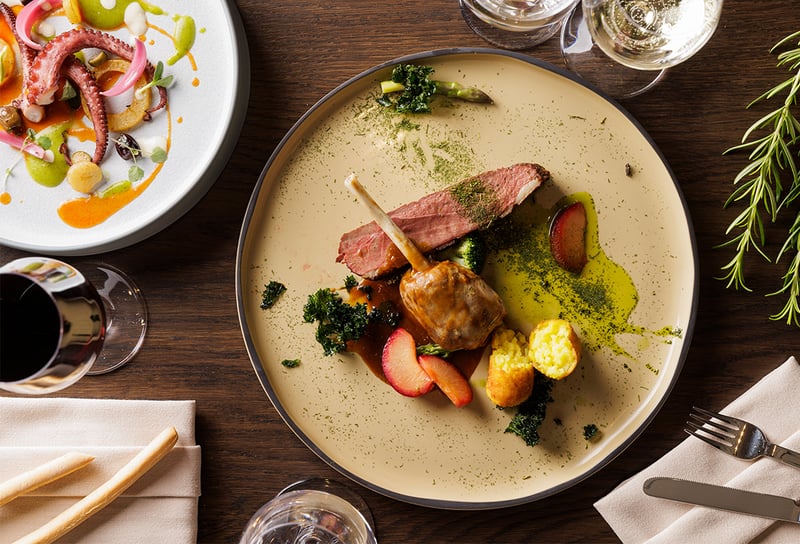
If there’s one thing that sets luxury cruising apart from every other type of holiday, it’s the food. The dining on a luxury ship isn’t just good, it’s genuinely world-class, and it’s all included in your fare.
A typical luxury ship will have between six and twelve restaurants, none of which carry a surcharge. You might start the voyage at the main dining room (which, on a luxury ship, is nothing like the regimented sit-down affairs you’ll find on mainstream lines, open seating, eat when you like, sit with whom you choose). By day three, you’ll be trying the Italian, the Japanese, the French bistro, and the poolside grill.
Some things worth knowing:
Open seating is the norm. On luxury lines, there are no fixed dining times and no assigned tables. Walk into any restaurant, at any time within its opening hours, and you’ll be seated. This is one of the great freedoms of luxury cruising, you eat when you’re hungry, not when a tannoy tells you to.
Speciality restaurants don’t charge extra. On mainstream lines, the steakhouse or teppanyaki restaurant costs £30 to 50 per person on top of your fare. On a luxury line, you walk in and order whatever you like. There’s no bill. This alone can save you hundreds over a week-long cruise.
You can order off-menu. Want a steak for breakfast? A second helping of lobster? Something from a different restaurant delivered to your suite? On a luxury line, the answer to all of these is yes. The galley exists to make you happy. Don’t be shy about asking.
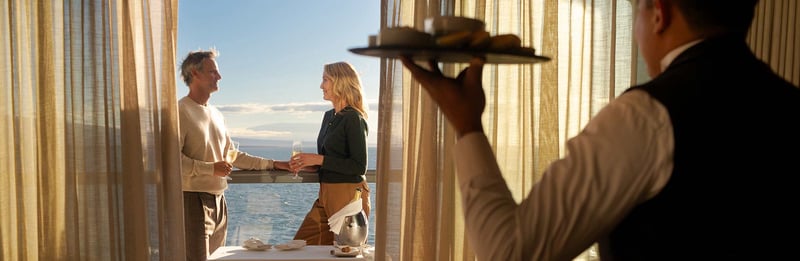
Room service is the real deal. On mainstream lines, room service means a soggy club sandwich at 2am. On luxury lines, you can order from the full restaurant menu and have it served on proper china, with proper cutlery, in your suite. Breakfast on the balcony, watching the ship pull into port, is one of cruising’s great pleasures. Do it at least once.
A word of caution from seasoned cruisers:
Pace yourself. The temptation to try everything on every menu on every night is real, and by day four you'll be planning your entire day around meals. It's a marathon, not a sprint.
Shore Excursions
Shore excursions are organised tours and activities at each port of call. They’re one of the best parts of cruising, you wake up in a new place, step off the ship, and someone else has sorted the logistics.
On luxury lines, you generally have three options:

Cruise line excursions. Organised by the ship, typically in small groups (luxury lines don’t do 50-person coach tours). The advantage is convenience and peace of mind, the ship will wait for its own excursion if it runs late. On Regent, all shore excursions are included in the fare, which is a significant perk, on other lines, even luxury ones, excursions are usually charged separately at around £50 to 150 per person per tour.
Private excursions. Most luxury lines offer bespoke private tours at additional cost. If you want a private guide in Rome, a wine tasting in Bordeaux, or a helicopter transfer in Monaco, this is the way to do it. These need to be booked well in advance.
Going it alone. Nothing stops you walking off the ship and exploring independently. In many ports, particularly in Europe, the town is right there on the waterfront. Grab a map (or open Google Maps), find a café, and wander. Just keep an eye on the time, the ship will not wait for independent travellers.
Our advice for first-timers:
Book at least a couple of cruise line excursions in the ports where logistics matter (Rome, for example, where the port is an hour from the city) and go independent in the smaller, walkable ports. You’ll get the best of both worlds.
Tipping and Gratuities
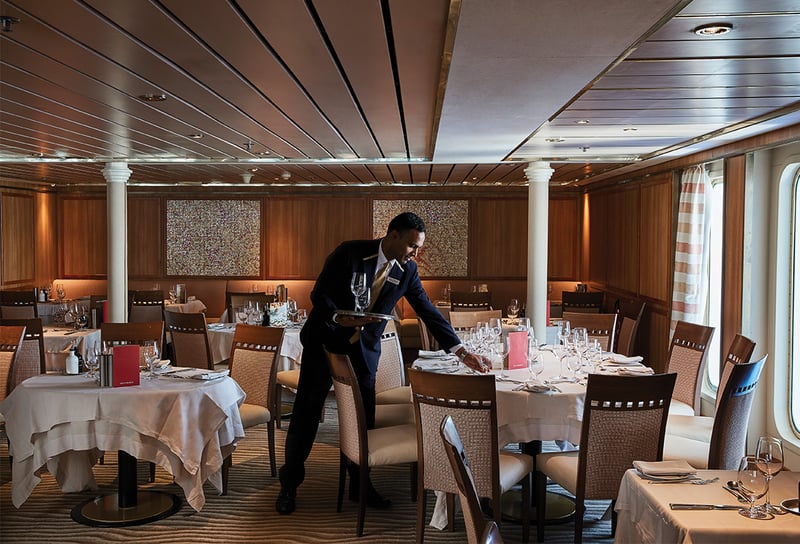
Good news: on a genuine luxury cruise line, gratuities are included in your fare. You don’t need to worry about tipping your waiter, your butler, your cabin steward, or the bartender. It’s all taken care of.
This applies across the board at Regent, Silversea, Seabourn, Explora Journeys, Oceania (as of 2025), and Scenic. You will not find a daily gratuity charge added to your onboard account.
That said, if someone provides truly exceptional service, a waiter who remembers your dietary requirements without being reminded, a butler who goes above and beyond, it’s perfectly acceptable (and appreciated) to slip them a small cash tip at the end of the voyage. This is entirely at your discretion. Many experienced cruisers keep a small stash of £5 and £10 notes for this purpose.
The only area where you might encounter an automatic gratuity on a luxury line is in the spa, where an 18 to 20% service charge is typically added to treatments. Check when you book.
If you’re sailing Cunard’s Grill Suites (which, as we mentioned, is a premium product rather than a luxury line), gratuities are not included. Cunard charges a daily service charge of around £13.50 per person, though this can be pre-paid before sailing.
Onboard Etiquette
Luxury cruise ships are relaxed, sociable places. There are very few “rules”, and the ones that exist are common sense:
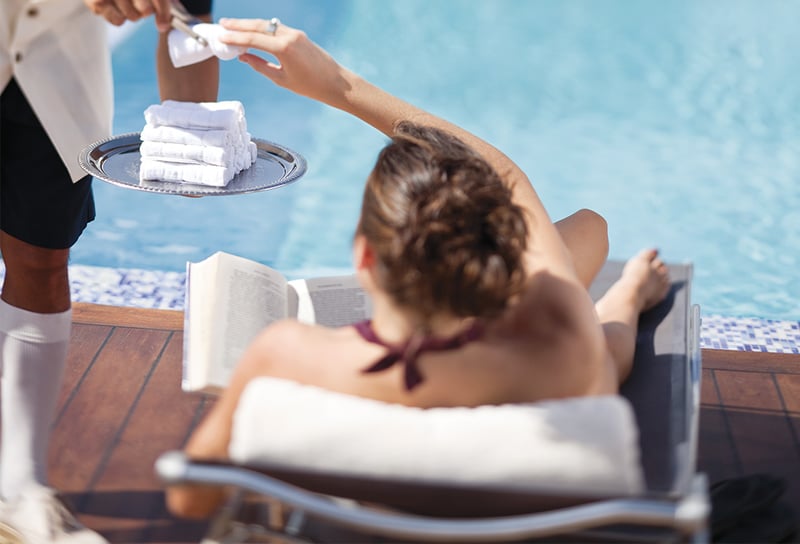
Be kind to the crew. They work incredibly hard, often for months at a stretch away from their families. A genuine “thank you” goes a long way. Learn a few names. Ask where they’re from. You’ll find the service gets even better, and you’ll make someone’s day.
Don’t reserve sun loungers. The towel-on-the-lounger-at-7am-then-disappear-until-noon routine is universally frowned upon. If you leave for more than 30 minutes, expect your towel to be tidied away.
Keep noise to a minimum after 10pm in public areas near suites. The ship’s bars and entertainment venues are designed for late nights; the corridors outside your fellow guests’ suites are not.
Respect the dress code in the evenings, even if you think it’s old-fashioned. The other guests have packed for it, and it’s part of the experience.
Don't try to do everything
This is perhaps the most important piece of advice anyone can give a first-time cruiser. The daily schedule will be packed with lectures, fitness classes, cooking demonstrations, port talks, cocktail parties, and entertainment. You do not need to attend all of them. The beauty of a luxury cruise is that there’s no pressure. Sleep in, read a book by the pool, skip the excursion and drink espresso at a portside café. Nobody’s keeping score.
A Word on Sea Days
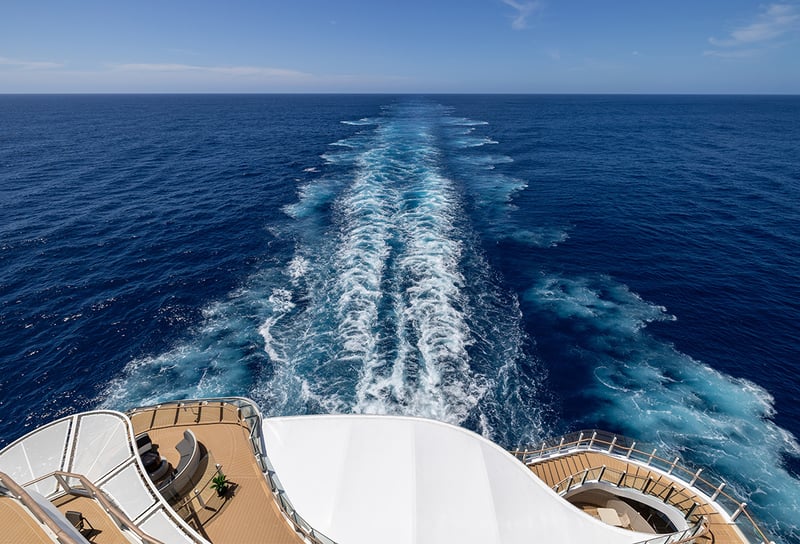
First-timers sometimes dread sea days, those days when the ship is sailing between ports with no land in sight. In practice, sea days are often the highlight of a cruise.
You finally have an entire day with nothing to do except exactly what you feel like doing. Sleep late. Order breakfast to your suite. Spend the morning at the spa. Have a long lunch. Attend a guest lecture. Read. Swim. Take an afternoon nap. Get dressed up for dinner. Watch a show. Drink a nightcap on your balcony under the stars.
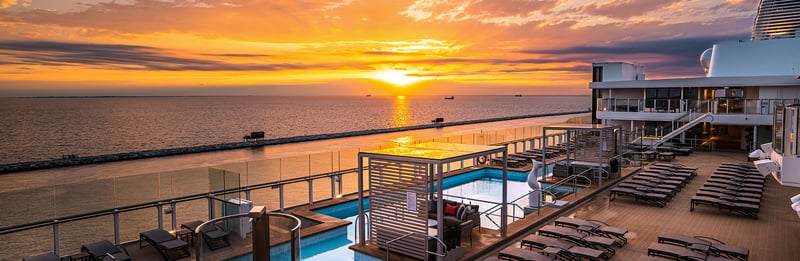
Luxury ships are designed for sea days. The pool decks are uncrowded, the spas are world-class, the libraries are well-stocked, and the bars are staffed by people who genuinely enjoy making you a good drink. Lean into it. A sea day is not a wasted day, it’s the reason you chose a cruise instead of a coach tour.
Booking Tips
A few practical suggestions to help you get the best value and the best experience:
Book early for the best suite selection. Luxury ships are small, and the most desirable suites, particularly midship on higher decks, sell out well in advance. Booking 12 to 18 months ahead gives you the widest choice. Many lines also offer “early booking” promotions with additional perks.
Or book late for the best price. If you’re flexible on dates and suite category, last-minute luxury cruise deals can be exceptional. Lines would rather sell a suite at a discount than sail with it empty.
Use a specialist cruise agent. An experienced agent (like, well, us) can often secure extras that aren’t available if you book directly, onboard credit, cabin upgrades, or exclusive offers. We also know the ships inside out and can recommend the right line, the right itinerary, and the right suite for your specific needs. There’s no extra charge for using an agent; our commission comes from the cruise line.
Consider a taster voyage. Many luxury lines offer short cruises of 5 to 7 nights, which are a perfect way to experience luxury cruising without committing to a fortnight. Silversea and Seabourn both run Mediterranean and Northern Europe sailings at this length.
Midship, mid-deck is the sweet spot. If you’re prone to motion sensitivity, book a suite in the middle of the ship, on a lower-to-middle deck. This is where you’ll feel the least movement. That said, modern luxury ships have excellent stabilisers, and genuine seasickness is far rarer than most people expect.
The Bottom Line
A luxury cruise is, quite simply, one of the best ways to see the world. You unpack once, you wake up somewhere new every morning, you eat brilliantly, you’re looked after by people who are very good at their jobs, and you don’t have to think about logistics, transfers, or restaurant bookings.
The price of entry is higher than a mainstream cruise or a package holiday. But once you factor in what’s included, flights, excursions, drinks, dining, tips, Wi-Fi, the per-day cost is often closer than you’d think. And the experience is in a different league entirely.
If you’re still on the fence, talk to us. We’ve sailed on these ships, we know the cabins, and we’ll give you an honest steer on which cruise line and itinerary is right for you. No hard sell. Just good advice from people who genuinely love what they do.
Ready to start planning? Browse our luxury cruise offers, explore cruises from the UK, or give us a call on 0800 008 6677, we’d love to help you find your first voyage.