Danube River Cruise Review: Why the Danube Is the Perfect Introduction to River Cruising
May 2026

David Smith
Managing Director
- Home
- >
- The Reading Deck
- >
- Danube River Cruise Review: Why the Danube Is the Perfect Introduction to River Cruising
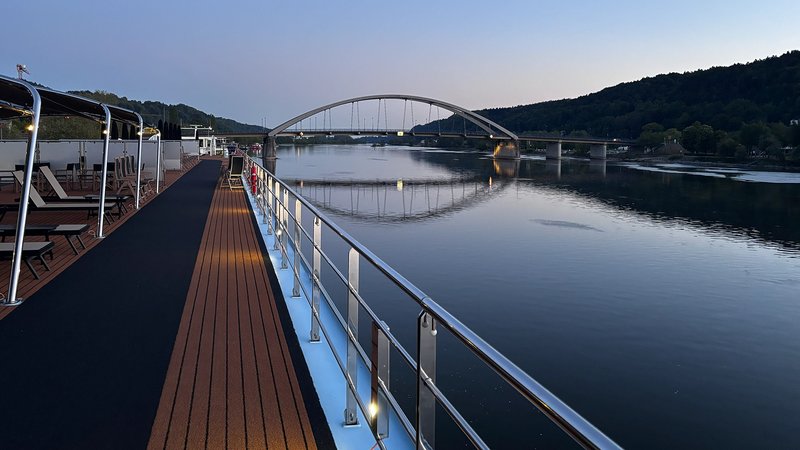
Having just returned from a seven-night AmaMora river cruise, I can’t imagine there are many better introductions to river cruising than AmaWaterways' Melodies of the Danube itinerary.
Joining AmaWaterways in Budapest and bound for Vilshofen, the itinerary combines grand capital cities with vineyard-covered valleys, medieval towns, and some of the most scenic stretches of river in Europe. Over the course of seven nights, we visited Bratislava, Vienna, Salzburg, and Passau, while also spending long periods simply sailing through the Austrian countryside itself. And perhaps that’s what makes the Danube such an enjoyable river cruise itinerary. It’s not simply about the destinations, but the experience of travelling between them.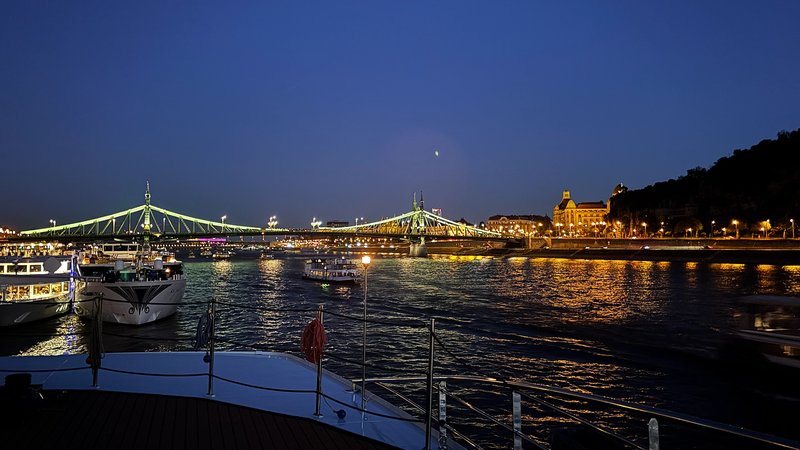
Budapest: The perfect place to begin
Even before stepping aboard in Budapest, I got the sense that the Danube is woven directly into the city’s identity. Grand architecture lines the waterfront on both sides, bridges stretch dramatically across the river, and almost everywhere you look, the river dominates the view.
Greeted by blue skies and spring sunshine, we spent the first afternoon getting accustomed to our new surroundings. In the evening, we had our first opportunity to experience the slower pace of river cruising, with dinner in the Journeys Restaurant followed by drinks in the lounge as the city lights reflected across the water outside.
The following morning, we headed out on our first excursion: a hiking tour up towards Buda Castle. It turned out to be an excellent introduction not only to Budapest itself, but to life ashore too. Guided tours are a cornerstone of the excursion experience, but there are different styles, which means there’s something for everyone. In this case, it was classified as a hike, which might have been slightly generous. Still, the guide was excellent, and the tour moved apace between the various historical landmarks.
The remainder of the afternoon was spent exploring Budapest independently (though afternoon tours were available for those who wished to partake).
Following dinner, we had the first ‘wow’ moment of the trip – after sunset, AmaMora departed the city, sailing past the Hungarian Parliament Building illuminated against the dark blue sky. If you’ve ever seen a river cruise brochure, you’ve probably seen a photo of this exact scene. But experience it in ‘real life’ is something else entirely.
The appeal of slower travel
On a river cruise, the journey itself becomes part of an attraction. You’re never just waiting around to hit the next port, which can be a marked difference to ocean cruising. There’s something deeply relaxing about spending a morning sailing through vineyard-covered valleys, tiny riverside villages, church spires, castles, and rolling countryside. There’s a depth to the experience, too, with quieter corners of Europe gradually revealing themselves as the ship makes its way along the river.
Bratislava: The city that surprised me the most
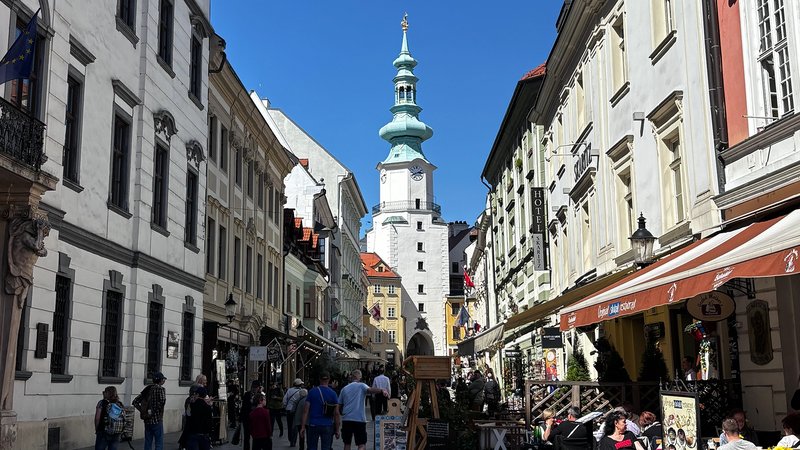
Bratislava, a city I had known little about before visiting, was one of the most pleasant surprises of the itinerary. A short walking tour through the Slovakian capital was followed by beers and Slovak snacks at a traditional brewhouse. That’s my kind of afternoon.
It turns out Bratislava is a very walkable city. Compact enough to explore comfortably in the afternoon, but full of character and details that make it memorable. The Old Town has a slightly quirky personality too, with its famous statues dotted around the streets, including the oddly iconic figure of a man emerging from a drain, apparently watching the world go by from street level.
Vienna, by bicycle
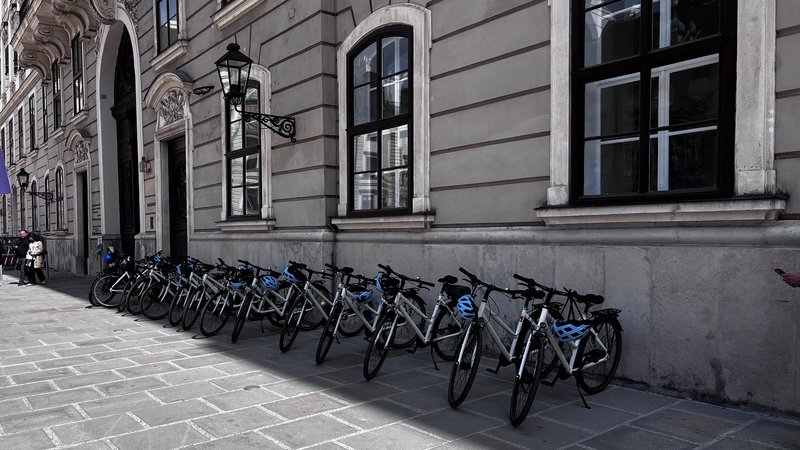
As I mentioned earlier, walking tours are available at each stop on a river cruise, and while they’re enjoyable, we needed a change of pace, so we settled on a cycle tour of the Austrian capital.
We stepped off the ship, collected our bikes, and within minutes were cycling directly into the city centre. That accessibility is arguably river cruising’s single biggest advantage over ocean cruising. There are no shuttle buses, no industrial ports sitting miles outside town, and no complicated logistics. You walk off the ship, and you’re there.
Vienna itself is, unsurprisingly, beautiful. Grand boulevards, imperial architecture, immaculate public spaces, and a sense of scale that feels distinctly different to the other cities along the Danube. I’m not entirely convinced it’s Europe’s most cycle-friendly city, largely because of the sheer number of traffic lights, but moments like turning a corner and suddenly finding yourself directly in front of the Hofburg Palace more than compensated for the stop-start nature of the route.
The Wachau Valley: the highlight of the itinerary
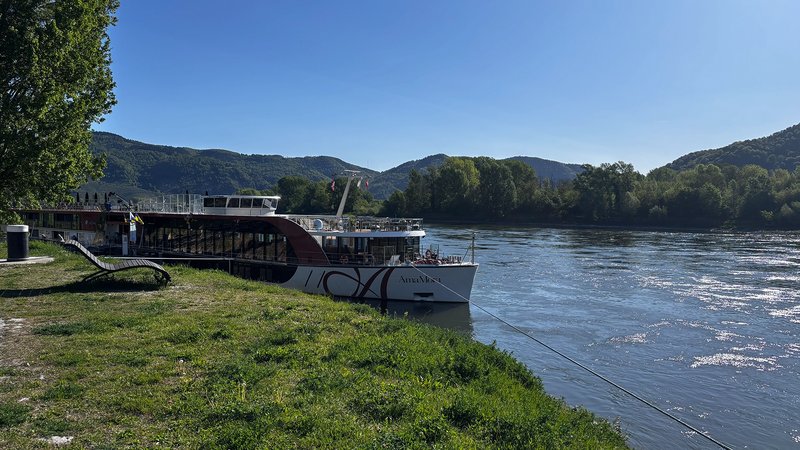
If there was one experience that perfectly encapsulated why AmaWaterways’ Melodies of the Danube cruise works so well, it was a cycling tour through Austria’s Wachau Valley. We left the AmaMora on bicycles, while the ship sailed onwards to the next destination. For much of the route, you cycle alongside the Danube itself, occasionally catching sight of the vessel before it disappears around the corner.
The scenery throughout the ride was extraordinary. Vineyards climbed steep hillsides above tiny Austrian villages, church towers emerged between clusters of historic buildings, and castle ruins overlooked the river from forested hilltops while long stretches of cycling path followed the water almost continuously.
It’s difficult to think of many holidays where you experience scenery like that in such a diverse way. And, because the cycling infrastructure throughout the region is so good, it was never intimidating, even for relatively casual cyclists. Up until this trip, it had been at least ten years since I’d last ridden a bike
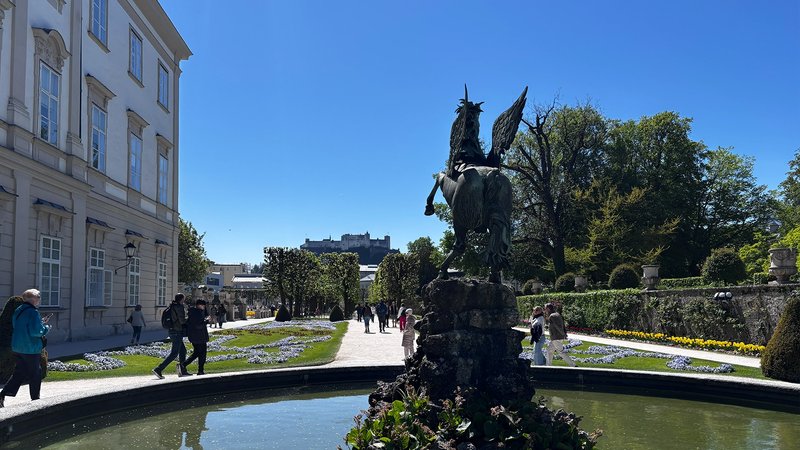
Salzburg and the convenience of river cruising
One of the longer excursions available during the itinerary was a full-day visit to Salzburg, which we couldn’t really pass up. Having never visited before, I was slightly surprised by how compact it felt. Elegant rather than sprawling. The city’s baroque architecture, mountain backdrop, and riverside setting give it an atmosphere that feels distinctly different to Vienna or Budapest.
We spent the morning on a guided walking tour before having several hours of free time to explore independently. Slightly embarrassingly, I’ve still never actually watched The Sound of Music, despite being reminded of it constantly throughout the day. It’s probably too late to rectify that now.
What struck me most about Salzburg, though, was how convenient river cruising makes this kind of travel feel. You experience major cultural cities and iconic landmarks without constantly unpacking, changing hotels, or navigating airports and train stations every couple of days. The logistics simply disappear into the background. It feels almost like a series of connected city breaks spread across a single week.
Passau and one final surprise
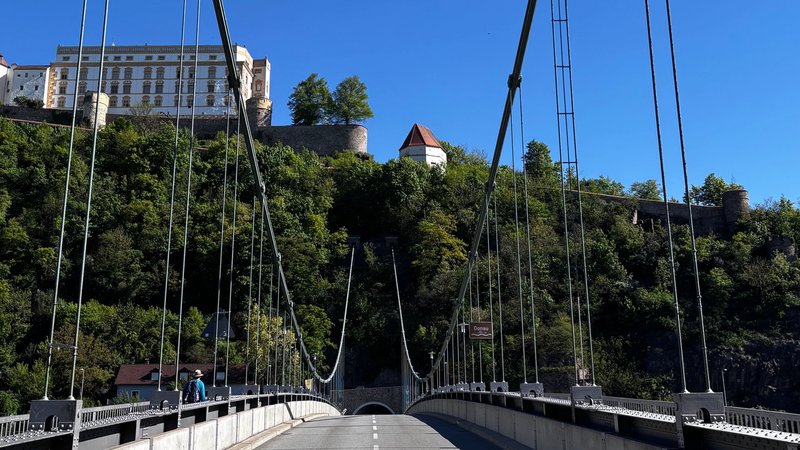
By the time we arrived in Passau, it was Labour Day across much of Europe, meaning much of the city was closed. Fortunately, Passau is easy-breezy enough that you can comfortably explore most of it within an hour or two on foot.
Situated at the meeting point of three rivers, the city has an attractive riverside setting and plenty of charming streets, cafés, and restaurants that would normally reward a longer afternoon of wandering. Even with the quieter atmosphere caused by the holiday, it still felt like an enjoyable final stop before disembarkation.
One of the most memorable moments actually came later that evening, when AmaWaterways organised a small Oktoberfest-style celebration directly on the dock beside the ship, complete with local beer, warm pretzels, and a traditional German band.
Everyone seemed to enjoy themselves, and it’s the type of experience I think should be offered more frequently, not just on a river cruise but even on ocean cruising. Sure, it’s not as informative as a guided tour, nor as spectacular as a bike tour through vineyards, but it’s more of a live-in-the-moment thing, more communal and, at times, more profound.
Why the Danube might be for you
Every river cruise operator sails the Danube and for good reason, with so much variety packed into a single week. You’ll visit grand capital cities, vineyard-covered valleys, medieval towns, mountain scenery, and quieter destinations that perhaps wouldn’t justify a standalone holiday but become hugely rewarding as part of a broader journey.
There’s also an accessibility to this kind of travel that’s difficult to overstate. Within minutes of docking, you’re usually standing directly in the centre of wherever you’re visiting. Coach trips are rare. No lengthy transfers. No exhausting travel days. Just the simple rhythm of arriving somewhere new almost every morning.
And perhaps that’s ultimately why the Danube works so well as an introduction to river cruising. It feels less like conventional cruising and more like a sequence of beautifully connected city breaks, all tied together by the river itself.