Northern Lights Cruises 2026: When, Where and How to See the Aurora
March 2026

Lindsey Price
Travel Advisor
- Home
- >
- The Reading Deck
- >
- Northern Lights Cruises 2026: When, Where and How to See the Aurora
What Causes the Northern Lights?
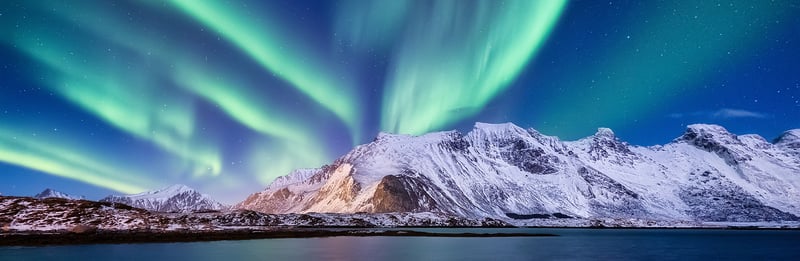
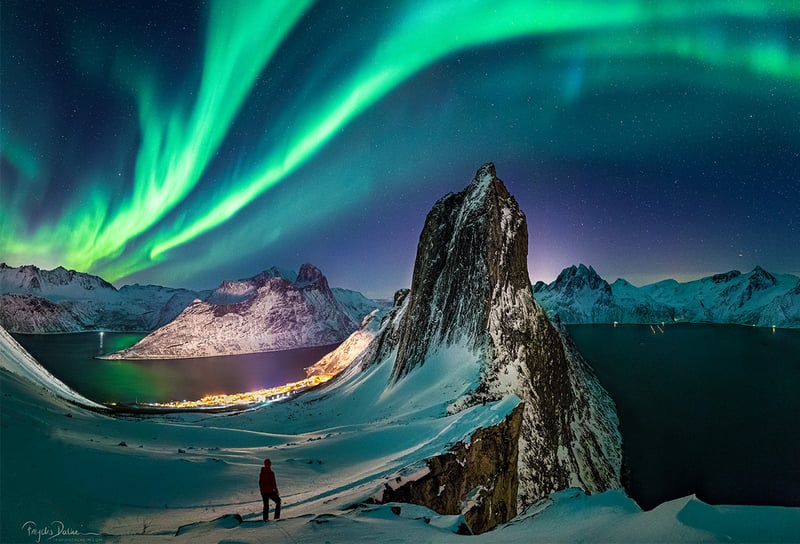
The aurora borealis occurs when electrically charged particles from the sun collide with gases in the Earth’s upper atmosphere. These collisions release energy as light, creating those characteristic curtains and ribbons across the sky. The colours depend on which gases are involved: oxygen produces green and red hues, while nitrogen creates blue and purple tones.
The lights are most visible within the ‘auroral oval’, a ring-shaped zone around the Earth’s magnetic north pole. This oval encompasses Northern Norway, Iceland, Northern Canada, Alaska and parts of Greenland. The further north you travel within this zone, the better your chances of a sighting.
Solar activity follows an approximately eleven-year cycle. 2026 is expected to fall near the solar maximum, meaning heightened activity and potentially more spectacular displays. If you have been waiting for the right moment to book a Northern Lights cruise, the timing is favourable.
When is the Best Time for a Northern Lights Cruise?
The aurora borealis is visible year-round in the Arctic, but you can only see it when the sky is dark. This limits the viewing season to late September through early April, when nights in the far north are long enough to provide proper darkness.
Within this window, timing involves trade-offs:
September and October: The autumn equinox (around 22 September) brings increased geomagnetic activity, making these months surprisingly productive for aurora sightings. Weather tends to be milder than deep winter, though storm systems can roll through. Fewer snow clouds overhead often means clearer skies.
November and December: Nights grow dramatically longer as the polar night approaches. Above the Arctic Circle, locations like Alta experience 24-hour darkness from late November to mid-January. Cold temperatures and snow create atmospheric conditions, though cloud cover can be an issue.
January and February: Peak darkness coincides with reliably cold, dry conditions that often produce clearer skies. Many dedicated aurora-hunters consider these the prime months, though temperatures can be challenging.
March and April: The spring equinox brings another peak in geomagnetic activity. Days lengthen rapidly, narrowing the window for darkness, but the weather is often more settled than in autumn. Late March offers a pleasant balance of aurora opportunity and increasing daylight for daytime exploration.
The honest answer is that there is no guaranteed best month. Clear skies and solar activity matter more than the specific week. A ship’s ability to reposition improves your odds considerably compared to a land-based stay in one location.
Where Do Northern Lights Cruises Sail?
Norway
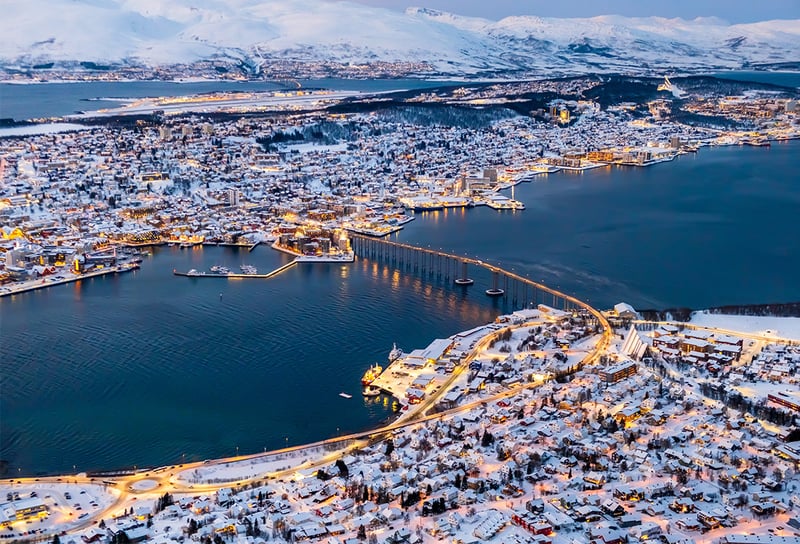
Norway’s northern coast is the heartland of Northern Lights cruising. The warm Gulf Stream keeps ports ice-free year-round, allowing ships to sail well above the Arctic Circle even in winter. Key destinations include:
Tromsø: Often called the ‘Gateway to the Arctic’, Tromsø sits at 69 degrees north and serves as the departure point for many Northern Lights itineraries. The city itself offers excellent aurora-viewing opportunities, along with the striking Arctic Cathedral and a vibrant cultural scene for daytime exploration.
Alta: Known as the ‘City of Northern Lights’, Alta has reliable cold, clear weather and sits directly under the auroral oval. The town experiences polar night from late November to mid-January, providing round-the-clock darkness.
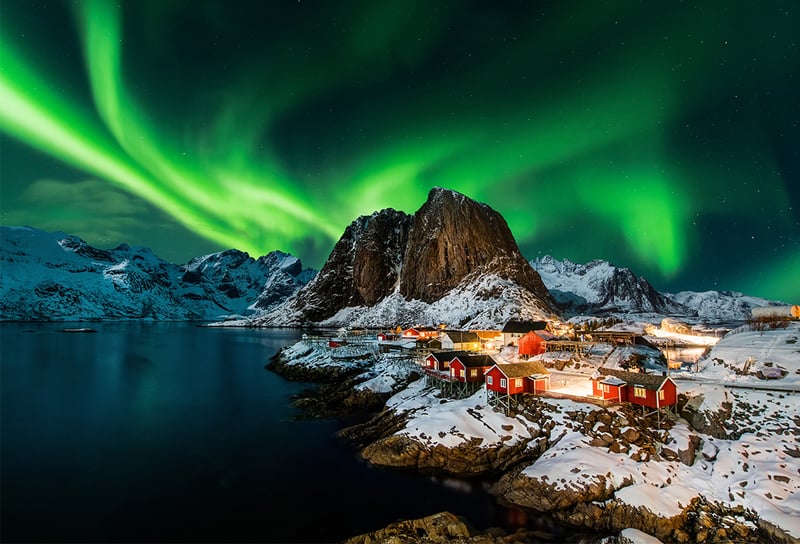
The Lofoten Islands: These dramatic islands, with their craggy peaks rising from the sea, provide spectacular foregrounds for aurora photography. The archipelago sits just inside the Arctic Circle and enjoys surprisingly mild temperatures for its latitude.
Honningsvåg and the North Cape: One of the northernmost points in Europe accessible by ship, the North Cape offers unobstructed views to the north. Some cruises include midnight expeditions to the Cape, combining aurora-watching with the drama of standing at the edge of the continent.
Iceland
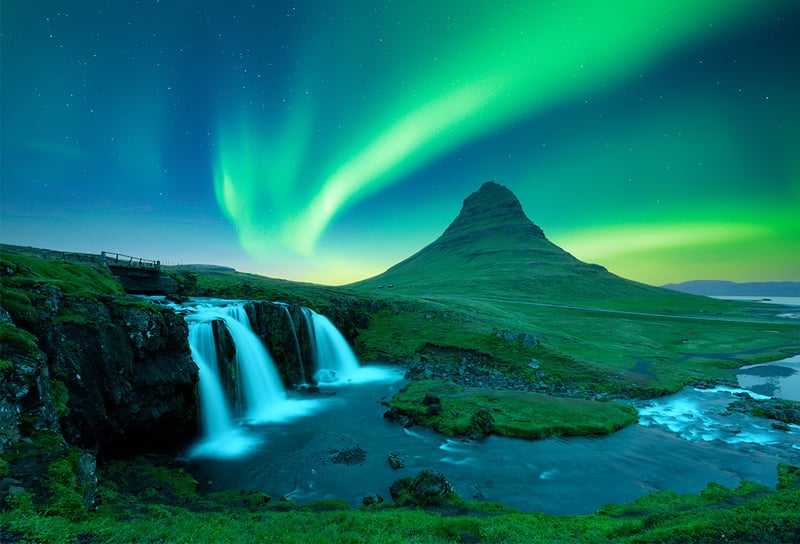
Iceland sits at the southern edge of the auroral oval, making it a viable (if less reliable) destination for Northern Lights viewing. The advantage lies in combining aurora-watching with Iceland’s extraordinary landscapes: volcanic terrain, glaciers, geysers and hot springs. Cruises departing from Reykjavik typically circumnavigate the island or head north toward Greenland.
Svalbard
This remote Norwegian archipelago, halfway between mainland Norway and the North Pole, offers perhaps the darkest skies of any inhabited destination. Longyearbyen, the main settlement, experiences polar night from mid-November to late January. Expedition cruises to Svalbard combine aurora opportunities with wildlife viewing – polar bears, walrus, Arctic foxes – and truly pristine wilderness.
What to Expect on a Northern Lights Cruise
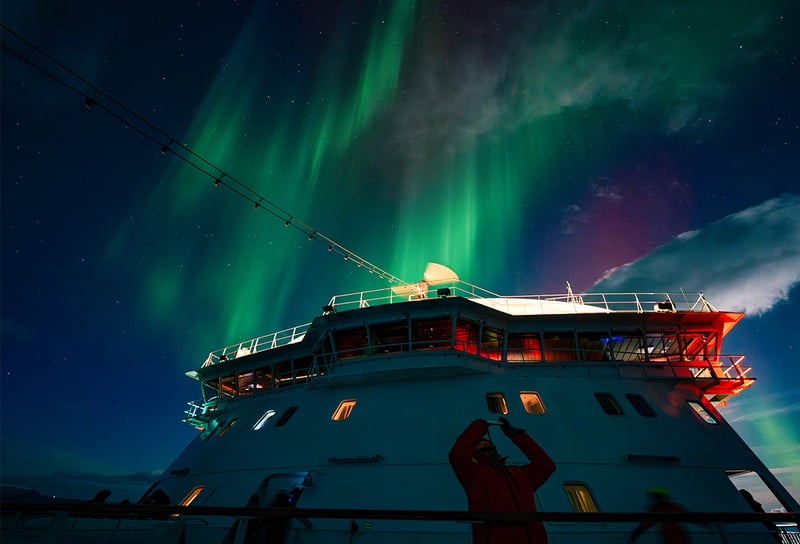
Ships operating in Arctic waters during aurora season are purpose-designed for the conditions. Ice-strengthened hulls, stabilisation systems and heated outdoor viewing areas come standard. Most vessels carry Zodiac inflatable boats for shore excursions and wildlife encounters.
Onboard, expect lecture programmes covering the science of the aurora, photography workshops tailored to capturing the lights, and expert guides who monitor solar activity and weather forecasts. Many ships maintain an ‘aurora watch’, alerting passengers when conditions look promising.
Shore excursions typically embrace the Arctic winter: dog-sledging, snowmobile safaris, reindeer sleigh rides, visits to Sami communities, ice hotels, and whale-watching. Norwegian ports offer everything from fjord kayaking to visits to fish markets and museums.
A note on expectations: the Northern Lights are a natural phenomenon, and sightings cannot be guaranteed. Cloud cover, solar activity and simple luck all play a role. The advantage of a cruise is flexibility – unlike a land-based hotel, a ship can sail to where conditions look most promising.
Which Cruise Lines Offer Northern Lights Voyages?
Northern Lights cruises divide broadly into two categories: expedition-focused voyages on small, purpose-built ships, and larger cruise ships that venture north on seasonal itineraries. Here are the key operators:
Hurtigruten
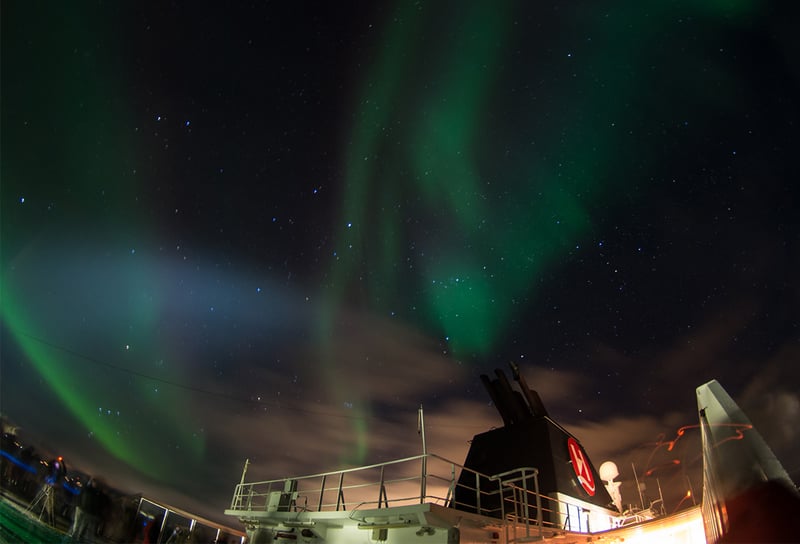
No discussion of Norwegian coastal cruising is complete without Hurtigruten. This Norwegian company has sailed the coast for over 130 years, and its Coastal Express route remains the definitive way to experience Arctic Norway. The 12-day Classic Voyage spends six nights above the Arctic Circle, stopping at 34 ports between Bergen and Kirkenes. Dedicated Northern Lights itineraries run from September through March, with the company’s ‘Northern Lights Promise’ offering a free voyage if the aurora fails to appear. Read our MS Trollfjord review to see what a Hurtigruten sailing is really like.
HX Expeditions
The expedition arm of the Hurtigruten group operates dedicated Northern Lights cruises aboard vessels like MS Spitsbergen. These all-inclusive voyages include excursions such as bonfire gatherings, Nordic sauna sessions, polar plunges and museum dinners. Itineraries typically run as Tromsø round-trips between January and April, visiting the Lofoten Islands, Senja and the Lyngen Alps. The Northern Lights Promise applies here, too.
Ponant
The French luxury expedition line brings considerable style to Arctic waters. Their fleet of sleek explorer yachts visits northern Norway from Tromsø in March, October and November, exploring the Lofoten Islands with an emphasis on refined comfort. For the truly adventurous, Le Commandant Charcot (their pioneering icebreaker) sails from Longyearbyen to Reykjavik in September, even calling at the geographic North Pole. Expect intimate ships, French-influenced cuisine and a sophisticated atmosphere.
Silversea
Silversea combines luxury service with expedition capability. While not offering dedicated Northern Lights cruises per se, their Arctic and Norwegian itineraries on ships like Silver Endeavour and Silver Cloud provide opportunities to see the aurora, particularly on late-season sailings. All-inclusive fares, butler service and comfortable expedition vessels make Silversea an attractive option for those who want luxury without sacrificing adventure.
Quark Expeditions
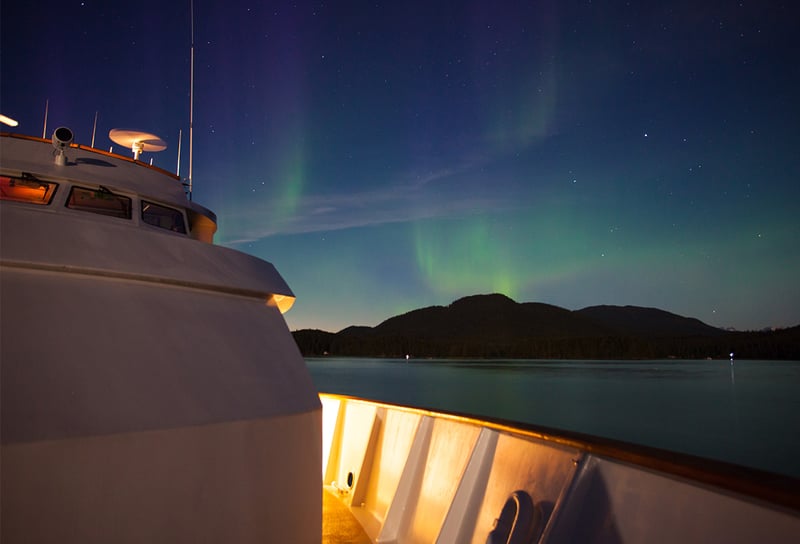
Polar specialists Quark operate ‘Under the Northern Lights’ itineraries aboard their flagship Ultramarine. These September departures combine aurora-watching with expedition landings, Zodiac cruises and opportunities to see Arctic wildlife. The ship features two twin-engine helicopters for unparalleled access to remote locations.
Viking
Viking’s ‘In Search of the Northern Lights’ itinerary spans 13 days from London (Tilbury) to Bergen, calling at Narvik, Tromsø and Alta along the way. The voyage combines cultural immersion with aurora viewing opportunities, including optional excursions such as dog-sledging and snowmobile safaris. Viking’s ocean ships bring their trademark Scandinavian design and inclusive pricing to the Arctic.
Cunard
Cunard operates seasonal Northern Lights itineraries, typically departing Southampton between late autumn and early spring. These provide an accessible introduction to aurora-watching aboard larger, familiar ships, offering the comfort of one of Britain’s most iconic cruise brands with the added excitement of Arctic sailing from the UK. Browse Cunard deals to see current availability.
AE Expeditions
Australian-founded Aurora Expeditions (now AE Expeditions) operates Northern Lights Explorer itineraries aboard the 130-guest Sylvia Earle. These August and September voyages visit Bear Island, Jan Mayen and the Lofoten Islands, combining aurora-watching with wildlife encounters. The X-BOW hull design provides exceptional stability in Arctic seas.
Practical Tips for Your Northern Lights Cruise
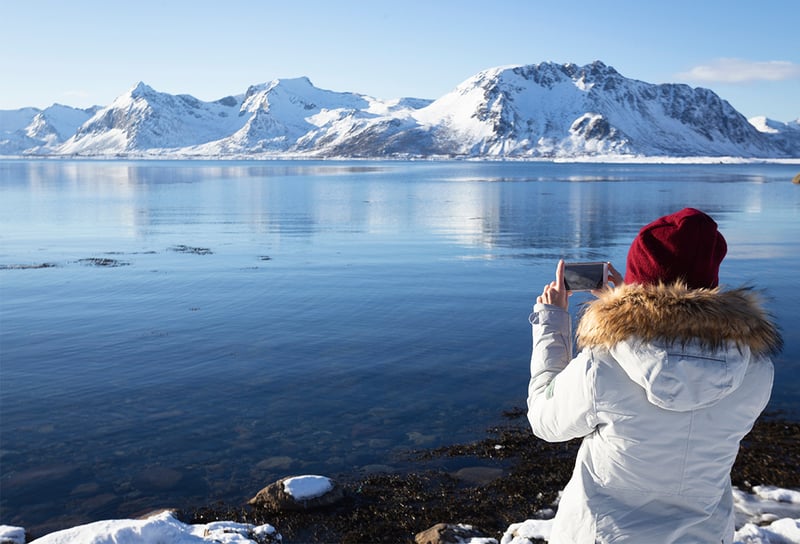
Pack for the cold: Even with heated viewing areas, you will spend time on deck in sub-zero temperatures. Bring thermal base layers, a windproof outer layer, insulated boots, warm gloves and a hat that covers your ears. Hand and toe warmers are invaluable.
Prepare your camera: Capturing the aurora requires a camera with manual settings, a sturdy tripod and a remote shutter release. Set a high ISO (1600–6400), wide aperture (f/2.8 or lower) and long exposure (5–25 seconds). Batteries drain quickly in the cold, so carry spares close to your body to keep them warm.
Book early: Northern Lights cruises are increasingly popular, and the best cabins sell out well in advance. Booking 12 to 18 months ahead secures the widest choice of departure dates and cabin categories. Browse our latest cruise deals to see what’s available.
Consider a longer voyage: More nights in the Arctic mean more chances to see the lights. If budget allows, opt for a 10 to 14-night itinerary rather than a shorter taster cruise.
Download Aurora apps: Apps like Aurora Forecast and My Aurora Forecast provide real-time Kp index readings (a measure of geomagnetic activity) and cloud cover predictions. While the ship’s expedition team will monitor conditions, having your own information adds to the anticipation.
Manage expectations: The aurora can appear as a faint glow rather than the vivid green curtains you see in photographs. Cameras often capture more colour than the naked eye. That said, a strong display is genuinely unforgettable.
Is a Northern Lights Cruise Right for You?
A Northern Lights cruise suits anyone who appreciates natural wonders and is comfortable with the uncertainty inherent in chasing a meteorological phenomenon. You need to embrace the possibility that the lights may not appear on your chosen voyage, while remaining open to the magic if they do.
The cruise format adds value beyond the aurora itself. Arctic Norway in winter is extraordinarily beautiful: snow-dusted mountains, frozen fjords, the soft blue light of polar twilight. Add in wildlife encounters, cultural experiences and the simple pleasure of sailing through pristine wilderness, and you have a holiday that rewards regardless of solar activity.
If witnessing the Northern Lights has long been on your list, 2026 offers unusually good odds. With solar activity peaking and an excellent choice of itineraries from expedition ships to luxury cruise lines, the time to book is now.
Ready to chase the Northern Lights? Our cruise specialists can help you choose the right itinerary, from expedition voyages to luxury small ships. Call us on 0800 008 6677 or get in touch online to start planning your Aurora adventure.