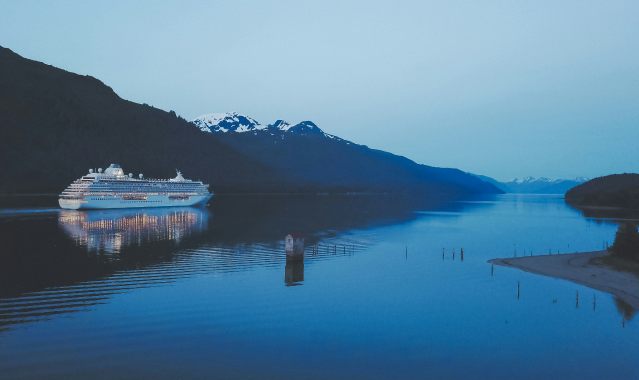
Vietnam & Cambodia Revealed
GO ALL IN

Go All In
Drinks, gratuities, and WiFi included plus up to 40% off selected sailings.
 10 nights
 Star Seeker
 15 Nov '26
Cruise overview
Prepare for an unforgettable journey through Vietnam, where you’ll uncover surprising discoveries as you travel over a thousand miles of the country’s breathtaking landscapes, savor delicious seafood and pho, and fill your days with adventure. Beginning or ending your cruise in Hanoi, gives you time to explore the layered history of Vietnam’s capital. An overnight in Halong Bay gives you time to cruise on a junk boat, exploring the limestone rock formations of this UNESCO world heritage site. Explore the narrow lanes of Hanoi’s Old Quarter and colonial architecture of the French Quarter before moving on. Da Nang, with its rich history and vibrant culture, is worth visiting for more than just its coastal beauty. Nearby you’ll find three UNESCO sites, including Hoi An Ancient Town, a tranquil 16th century trading town where you can still walk or bicycle the picturesque lanes with nary a car in sight. Delve into Vietnam’s more recent past in Ho Chi Minh City, where French colonial architecture, traditional Vietnamese temples, and modern skyscrapers stand side-by-side with artifacts of the Vietnam War, like the Presidential Palace with a Communist tank still poised on the front lawn. Another overnight stay here lets you get to know farmers and fishermen in the Mekong Delta, see the secretive Cu Chi Tunnels that played a crucial role in the Viet Cong’s 1975 victory. In addition to Vietnam, you will have several options to explore Cambodia, including a full-day visit to Pnomh Penh or a 2-night tour to Angkor Wat. This cruise starts or ends in Bangkok, giving you an opportunity to experience one of Asia’s most vibrant cities.
Itinerary
Ha Long Bay
A visit to the north is not complete without a trip to Halong Bay, where placid waters give way to more than 3,000 limestone karsts and wind-sculpted limestone formations that jut from foggy lagoons. Dotting the bay are tiny islands bordered by white sandy coves and hidden caves, adding to the majestic landscape of this UNESCO World Heritage Site. Adding to this naturalist’s dream is the biodiversity of islets, grottos, and Cat Ba Island National Park. The bay, however, shows tourism’s impact: the clearing of mangrove forests to make way for jetties and piers, marine life threatened by game fishing, and garbage from passenger boats and fishing villages washed up on the shores.Beyond its geological uniqueness are activities like hiking, kayaking, rock climbing, or exploring one of the many floating villages where fishermen bring in their daily catch. The downside to all this allure is the large number of unlicensed boats it draws to the bay each day.Boat trips out onto the bay are the main tourism stock in trade farther north, but a more multifaceted side of the area can be experienced at Cat Ba Island. The largest island in Halong Bay, Cat Ba is very much its own entity. Its national park offers incredible biodiversity, with more than a thousand species of plants having been recorded here. Animal life is slightly thinner on the ground, but alert visitors may spy inhabitants such as the endangered golden-headed langur, wild boar, deer, civets, and several species of squirrel. Trekking through the wilderness is a highlight with a number of fascinating trails to follow.Cat Ba Island has also become a firm favorite with the adventure sports set. Indeed, along with Railay Beach in Thailand, it is recognized as one of the top spots in the region for rock climbing. Other outdoor pursuits include sailing and kayaking around the karsts. Although Halong Bay has arguably been tainted by over-exposure, Bai Tu Long Bay farther east toward China, retains all the majesty of Vietnam’s premier bucket-list natural attraction but sees a fraction of the traffic of its immediate neighbor to the west. Here, visitors will find islands of substantial size with deserted beaches and untamed jungle. Halong Bay’s 3,000 islands of dolomite and limestone cover a 1,500-square-km (580-square-mile) area, extending across the Gulf of Tonkin nearly to the Chinese border. According to legend, this breathtaking land- and seascape was formed by a giant dragon that came barreling out of the mountains toward the ocean—hence the name (Halong translates into “descent of the dragon”). Geologists are more likely to attribute the formations to sedimentary limestone that formed here between 300 and 500 million years ago, in the Paleozoic Era. Over millions of years water receded and exposed the limestone to wind, rain, and tidal erosion.Today the limestone formations are exposed to hordes of tourists—but don’t let that discourage you. Hundreds of fishing trawlers and tour boats share space on these crystal waters, yet there seems to be room for everyone. Most people use the main population center, Halong City, as a base from which to venture into the bay. Although it’s now officially one municipality, Halong City was, until 1996, two separate towns: Bai Chay is now Halong City West, where Halong Road winds its way around the coast and past the lifeless central beach; Hon Gai is the grimier Halong City East, where a coal transportation depot dominates the center of town and covers nearby roads and buildings with a sooty film. Locals still refer to the towns by their old names, but they are now inexorably lassoed together by a bridge. Boat trips through Halong Bay are the main attraction. Little of the majesty of this region can be found in the city, so head out onto the water and start exploring. Countless 10- and 30-foot fishing boats have been converted into Halong Bay’s formidable tourist-boat fleet. Hotels or travel agencies in Halong City or Hanoi can arrange boat trips for you (often they are part of organized tours from Hanoi). It is still possible to go down to the wharf and bargain yourself onto a boat for the day, but you are likely to be charged (sometimes significantly) more than you would pay for a prebooked tour, so this is not advised. Self-sufficient travelers have fallen victim to the old bait-and-switch: they’ve arranged a next-day boat tour with local fishermen, only to be told in no uncertain terms the following morning that they could not board their chosen boat, but they could take a different one for quite a bit more money. You may have no choice in the end. Usually travel agencies, however, have their tried-and-true favorites.
Read More
Ha Long Bay
Da Nang
Chan May
 At sea
Ho Chi Minh City
Ho Chi Minh City
At sea
Sihanoukville
Koh Kood
Bangkok
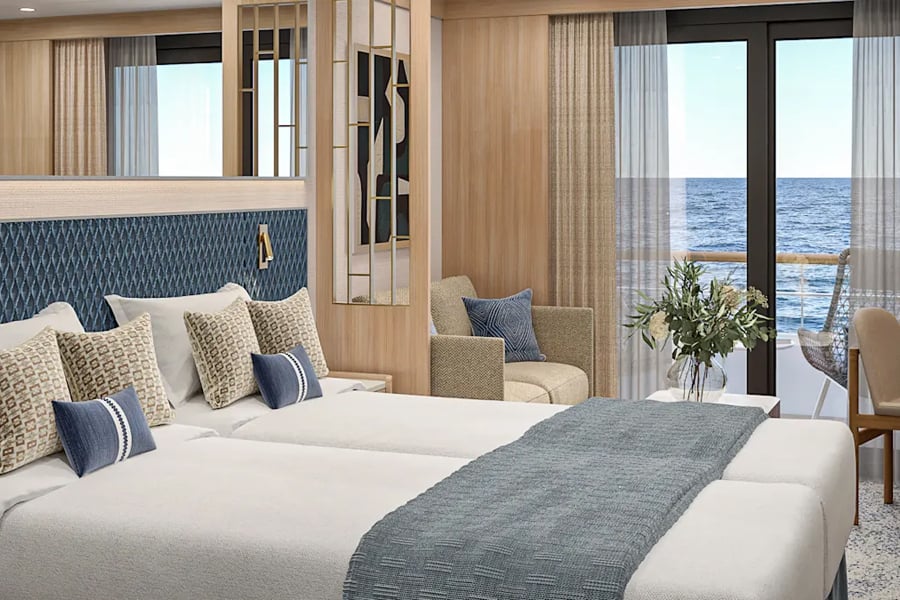
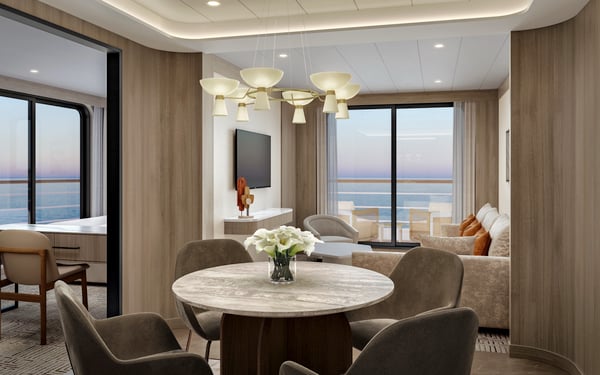
Horizon Owners Suite
The Horizon Owner’s Suite represents the pinnacle of Windstar luxury. Featuring a private veranda, separate living and dining areas, and panoramic ocean views, it combines space, elegance and exclusivity. Refined furnishings and attentive service create a serene, residential-style retreat designed for exceptional comfort and indulgence at sea.


Amenities
- King or Twin Configuration
- Lounge Area
- Dining Area
- Vanity Area
- Shower
- Toiletries Provided
- TV
- Media/Entertainment Station
- Safe
- Hair Dryer
- Telephone
- Desk
- Air Conditioning
- Wi-Fi (Additional Cost)
- Mini Bar (Additional Cost)
Ship features
Star Seeker combines elegant yacht-style design with new innovations, offering Windstar’s most advanced ship to date.
- All-suite accommodation for 224 guests
- New suite categories, including Horizon Owner’s, Infinity, and Vista Suites
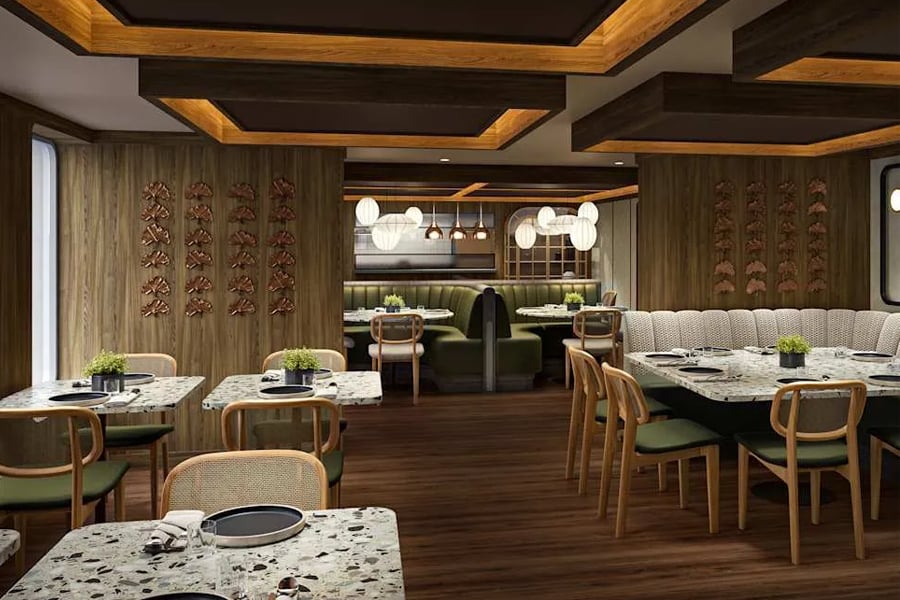
- Four restaurants, including a new speciality dining venue
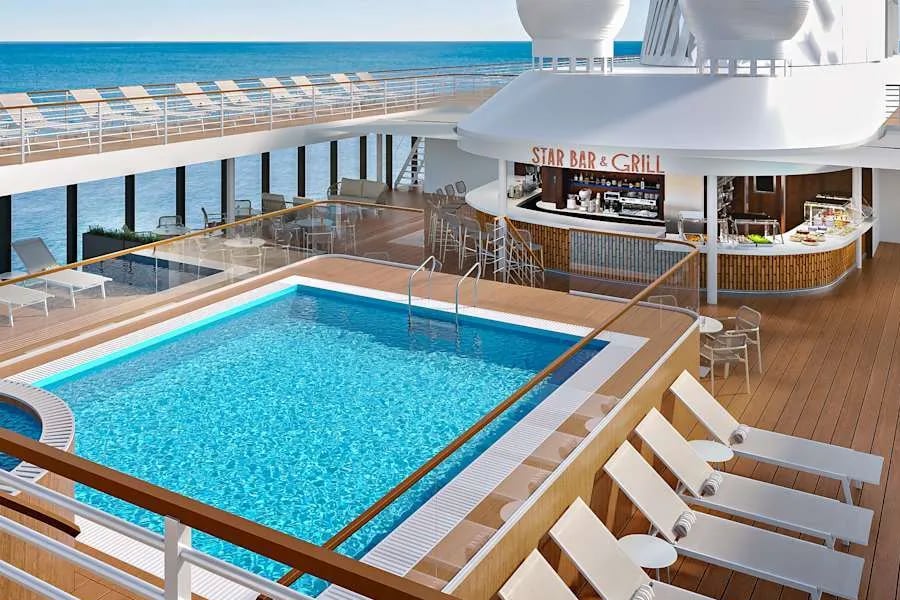
- Infinity pool and spacious sun deck
- World Spa by Windstar with ocean-view treatment rooms
- Water sports marina with complimentary kayaks and paddleboards
- State-of-the-art sustainability technology and water filtration systems
- Ice-strengthened hull for polar itineraries
- Hybrid-ready propulsion and ship-to-shore connectivity
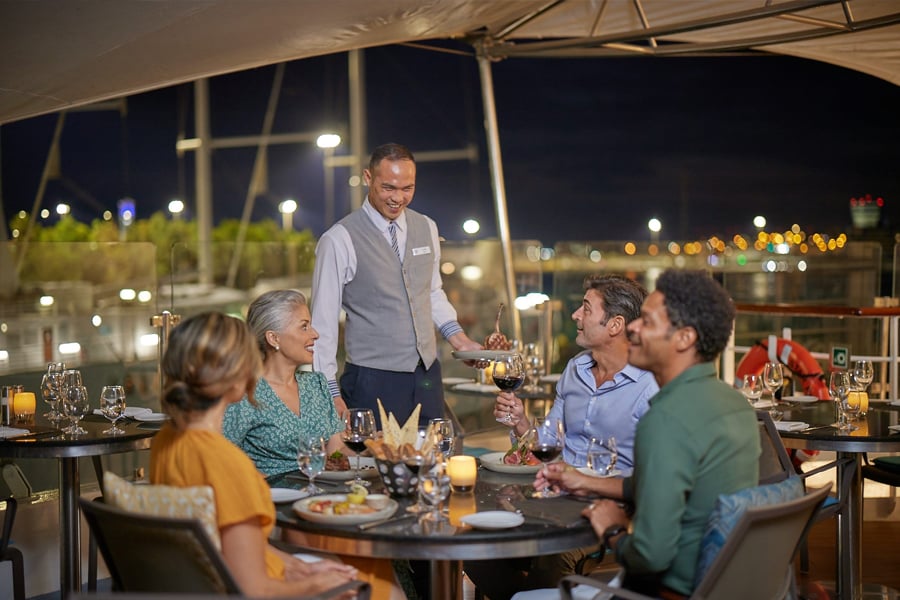
- Friendly, inclusive atmosphere and open-seating dining