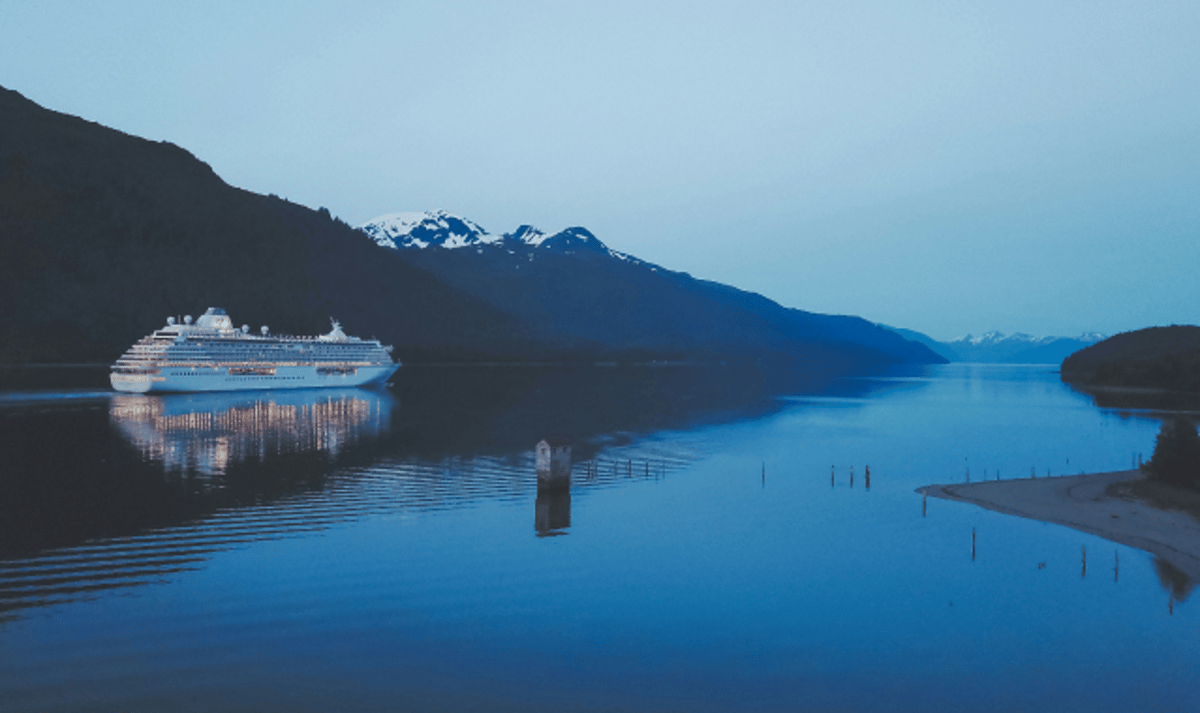
Lavrion to Piraeus

 5 nights
 Evrima
 30 Sep '26
Cruise overview
Relax at the beach clubs looking out to the sapphire sea on Mykonos, and walk through the strikingly white-painted, terraced towns of Santorini’s caldera. The expansive ancient ruins of Ephesus are within easy reach from Kusadasi and are a perfect primer for even more historic exploration on Crete, with its Venetian, Ottoman, and Egyptian influences.
Itinerary
Lavrion
Santorini
Undoubtedly the most extraordinary island in the Aegean, crescent-shape Santorini remains a mandatory stop on the Cycladic tourist route—even if it’s necessary to enjoy the sensational sunsets from Ia, the fascinating excavations, and the dazzling white towns with a million other travelers. Called Kállisti (the “Loveliest”) when first settled, the island has now reverted to its subsequent name of Thira, after the 9th-century-BC Dorian colonizer Thiras. The place is better known, however, these days as Santorini, a name derived from its patroness, St. Irene of Thessaloniki, the Byzantine empress who restored icons to Orthodoxy and died in 802. You can fly conveniently to Santorini, but to enjoy a true Santorini rite of passage, opt instead for the boat trip here, which provides a spectacular introduction. After the boat sails between Sikinos and Ios, your deck-side perch approaches two close islands with a passage between them. The bigger one on the left is Santorini, and the smaller on the right is Thirassia. Passing between them, you see the village of Ia adorning Santorini’s northernmost cliff like a white geometric beehive. You are in the caldera (volcanic crater), one of the world’s truly breathtaking sights: a demilune of cliffs rising 1,100 feet, with the white clusters of the towns of Fira and Ia perched along the top. The bay, once the high center of the island, is 1,300 feet in some places, so deep that when boats dock in Santorini’s shabby little port of Athinios, they do not drop anchor. The encircling cliffs are the ancient rim of a still-active volcano, and you are sailing east across its flooded caldera. On your right are the Burnt isles, the White isle, and other volcanic remnants, all lined up as if some outsize display in a geology museum. Hephaestus’s subterranean fires smolder still—the volcano erupted in 198 BC, about 735, and there was an earthquake in 1956. Indeed, Santorini and its four neighboring islets are the fragmentary remains of a larger landmass that exploded about 1600 BC: the volcano’s core blew sky high, and the sea rushed into the abyss to create the great bay, which measures 10 km by 7 km (6 mi by 4½ mi) and is 1,292 feet deep. The other pieces of the rim, which broke off in later eruptions, are Thirassia, where a few hundred people live, and deserted little Aspronissi (“White isle”). In the center of the bay, black and uninhabited, two cones, the Burnt Isles of Palea Kameni and Nea Kameni, appeared between 1573 and 1925. There has been too much speculation about the identification of Santorini with the mythical Atlantis, mentioned in Egyptian papyri and by Plato (who says it’s in the Atlantic), but myths are hard to pin down. This is not true of old arguments about whether tidal waves from Santorini’s cataclysmic explosion destroyed Minoan civilization on Crete, 113 km (70 mi) away. The latest carbon-dating evidence, which points to a few years before 1600 BC for the eruption, clearly indicates that the Minoans outlasted the eruption by a couple of hundred years, but most probably in a weakened state. In fact, the island still endures hardships: since antiquity, Santorini has depended on rain collected in cisterns for drinking and irrigating—the well water is often brackish—and the serious shortage is alleviated by the importation of water. However, the volcanic soil also yields riches: small, intense tomatoes with tough skins used for tomato paste (good restaurants here serve them); the famous Santorini fava beans, which have a light, fresh taste; barley; wheat; and white-skin eggplants.
Read More
Kusadasi
Mykonos
Khania
Piraeus
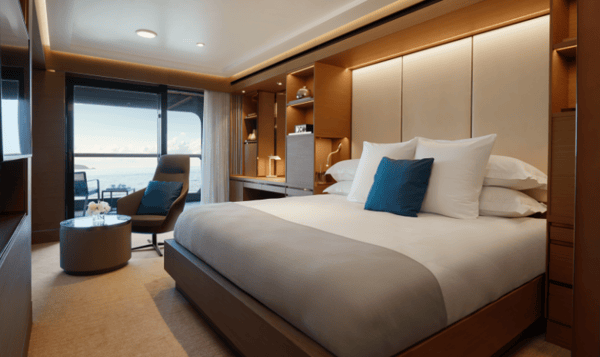
Amenities
- King or Twin Configuration
- Lounge Area
- Shower
- Toiletries Provided
- Room Service Available
- Free Mini Bar
- TV
- Free Wi-Fi
- Media/Entertainment Station
- Coffee Machine
- Safe
- Hair Dryer
- Pillow Menu Available
- Telephone
- Desk
Ship features
Evrima blends understated elegance with intimate amenities, emphasising comfort, privacy and immersive experiences.
- All-suite design; no standard cabins
- Private terraces for every suite
- Suite ambassadors and in-suite dining
- Five elevated dining venues (no buffet)
- Spa with treatment rooms and terrace views
- Marina platform for water sports access
- Loft, Signature, Grand and Owner’s Suites
- Observation lounges, The Living Room and bars
- Extended stays at anchor on many itineraries
- Luxury hotel-style touches: robes, premium linens, bespoke toiletries