Belfast to Copenhagen

 14 nights
 Silver Dawn
 24 May '27
Cruise overview
Itinerary
Belfast
Before English and Scottish settlers arrived in the 1600s, Belfast was a tiny village called Béal Feirste (“sandbank ford”) belonging to Ulster’s ancient O’Neill clan. With the advent of the Plantation period (when settlers arrived in the 1600s), Sir Arthur Chichester, from Devon in southwestern England, received the city from the English Crown, and his son was made Earl of Donegall. Huguenots fleeing persecution from France settled near here, bringing their valuable linen-work skills. In the 18th century, Belfast underwent a phenomenal expansion—its population doubled every 10 years, despite an ever-present sectarian divide. Although the Anglican gentry despised the Presbyterian artisans—who, in turn, distrusted the native Catholics—Belfast’s growth continued at a dizzying speed. The city was a great Victorian success story, an industrial boomtown whose prosperity was built on trade, especially linen and shipbuilding. Famously (or infamously), the Titanic was built here, giving Belfast, for a time, the nickname “Titanic Town.” Having laid the foundation stone of the city’s university in 1845, Queen Victoria returned to Belfast in 1849 (she is recalled in the names of buildings, streets, bars, monuments, and other places around the city), and in the same year, the university opened under the name Queen’s College. Nearly 40 years later, in 1888, Victoria granted Belfast its city charter. Today its population is nearly 300,000, tourist numbers have increased, and this dramatically transformed city is enjoying an unparalleled renaissance.This is all a welcome change from the period when news about Belfast meant reports about “the Troubles.” Since the 1994 ceasefire, Northern Ireland’s capital city has benefited from major hotel investment, gentrified quaysides (or strands), a sophisticated new performing arts center, and major initiatives to boost tourism. Although the 1996 bombing of offices at Canary Wharf in London disrupted the 1994 peace agreement, the ceasefire was officially reestablished on July 20, 1997, and this embattled city began its quest for a newfound identity.Since 2008, the city has restored all its major public buildings such as museums, churches, theaters, City Hall, Ulster Hall—and even the glorious Crown Bar—spending millions of pounds on its built heritage. A gaol that at the height of the Troubles held some of the most notorious murderers involved in paramilitary violence is now a major visitor attraction.Belfast’s city center is made up of three roughly contiguous areas that are easy to navigate on foot. From the south end to the north, it’s about an hour’s leisurely walk.
Read More
Greencastle
Stornoway, Isle of Lewis
Kirkwall, Orkney Islands
 At sea
Trondheim
Åndalsnes
Ålesund
Olden
Bergen
Stavanger
Kristiansand
Oslo
At sea
Copenhagen
What's Included
Here’s what’s included when you sail aboard Silver Dawn:
- All dining & meals
- Gratuities
- Access to the spa and fitness centre
- Premium beverages
- WiFi
- Butler service in every suite
Panorama Suite
Beautifully designed for relaxation, the Panorama Suite offers sweeping ocean views through large windows, a plush sitting area, walk-in wardrobe and luxurious marble bathroom, blending comfort and sophistication.

Amenities
- Queen or Twin Configuration
- Lounge Area
- Room Service Available
- TV
- Free Wi-Fi
- Safe
- Hair Dryer
- Telephone
- Desk
- Bath
- Shower
- Toiletries Provided
- Suite Benefits
- Media/Entertainment Station
- Pillow Menu Available
- Vanity Area
Ship features
Silver Dawn marries expansive luxury with local immersion and wellness-first design.
- All-suite vessel with 298 cabins (286 with verandas)
- S.A.L.T. Kitchen and Lab delivering regional culinary experiences
- OTIUM spa offering signature 100-minute treatments
- Eight dining venues spanning global and local cuisine
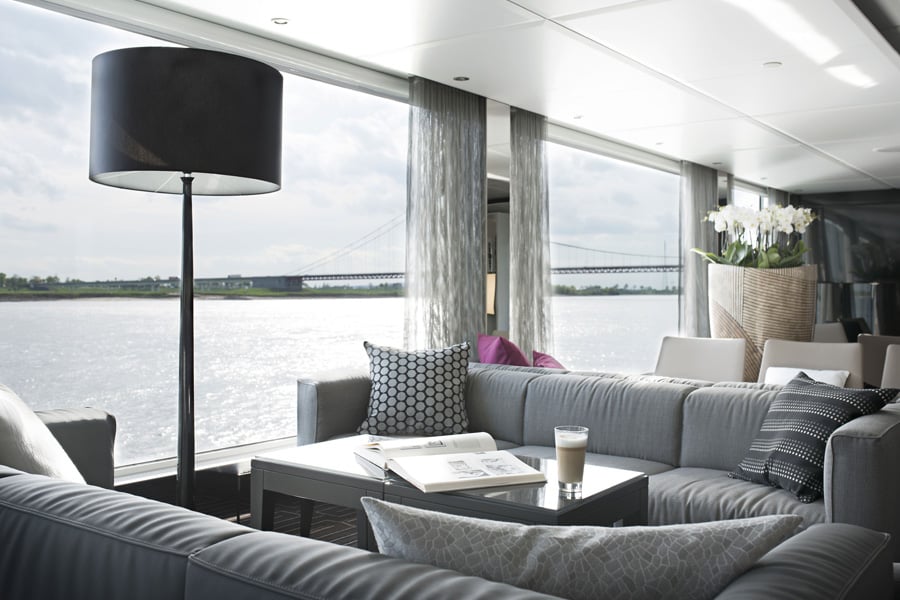
- Panorama, Observation & Venetian lounges
- Pool deck with sun terraces and glass-walled solarium
- Library, boutique, theatre, casino and social bars
- Open promenades and elegant public spaces