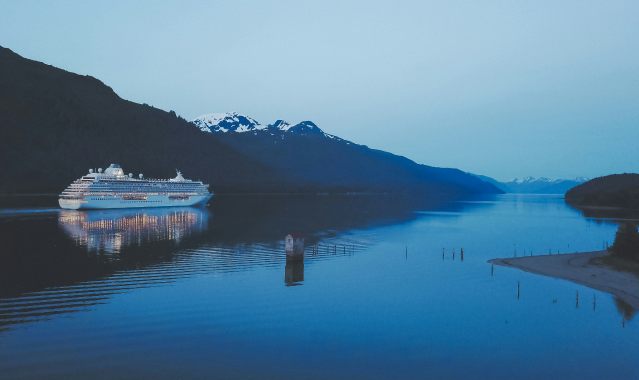
A Celebration of Art: The French & Italian Rivieras and Corsica
TICKET TITLE

Ticket Title
The is an offer
 8 nights
 Le Dumont-d'Urville
 10 Jul '26
Cruise overview
This cruise is part of a collection of PONANT themed voyages that are specially tailored for travelers who want to engage with the world. In addition to the usual elements of the PONANT experience, the listed price for these voyages includes transfers to and from the ship, talks and discussions aboard ship by world-class experts, and a shore excursion or activity in each port of call that encourages guests to embrace the sights, sounds, tastes, and smells of the local environment and culture.
This voyage along the French and Italian Rivieras, including Corsica , is designed for travelers interested in Western Art from the Renaissance onward, with a special focus on modern and contemporary painting and sculpture. From day one, when the choice of activities includes museums dedicated to Renoir and Picasso, to the final day, when the remarkable collection of late-20th-century art in the Maeght Foundation is center stage, painting and sculpture are the focus of nearly all we do. The modern art at either end of the voyage is balanced with two days devoted to the art of the Italian Renaissance as we visit the Fesch Museum on Corsica and the great museums of Rome.
Departing from Nice, beginning in the resort town of Cannes , your gateway to a region of southern France with deep ties to the world of modern and contemporary art. Three choices present themselves: The neighboring village of Mougins , where Picasso spent the last years of his life, is home to the new (2024) Femmes Artistes Musée, showcasing the work of women artists from the late 19th century to the present. In Antibes , just east of Cannes, you will find the Picasso Museum, housed in a castle that was once the artist’s studio, and in Cagnes-sur-Mer you may visit the estate that served as Renoir’s home and workshop from 1907 until his death.
Leaving Cannes, spend two days exploring the French island of Corsica . In Ajaccio, the island’s capital, you might visit Maison Bonaparte , the house where Emperor Napoleon was born in 1769, now a museum, or you may prefer to explore the Fesch Museum , generally recognized as having the finest collection of Italian painting in France outside of the Louvre. Then, in Bonifacio , perched high on cliffs above Corsica’s southern coast, tour the old town’s winding medieval lanes of brightly colored houses and admire their Gothic architecture before visiting Corsica’s own Biennale of contemporary art .
From Civitavecchia , travel to Rome, the Eternal City, where you have a choice of three museums to explore. In the Vatican Art Museums enjoy a guided tour focused on some of the most famous works in the collection before visiting the Sistine Chapel and Michelangelo’s Creation of Adam . Or you may prefer to tour Villa Borghese , displaying, among other treasures, sculptures by Bernini and paintings by Caravaggio, Titian , and Raphael . Or, if a more intimate setting appeals to you, you can visit the Doria Pamphili Gallery , one of the most prestigious private art collections in Rome.
Portoferraio , the main harbor of Elba, was founded by the Medici in the 16th century, but is most famous as the site of Napoleon Bonaparte’s exile in 1814-15. You may choose to learn about the Emperor’s life on the island by visiting one of his residences—either Villa San Martino or Villa dei Mulini, both of which are now museums. Alternatively, visit the small Ottoni Botanical Garden and the charming village of Capoliveri .
Once a small Italian fishing village, Portofino is now a favored haunt of the rich and famous. This beautiful resort town welcomes you for a relaxing day of leisure. A guided walking tour will orient you to the village, after which you can browse it shops and galleries at your own pace and perhaps sample the local cuisine.
For the final day of the journey, you may travel from Nice to the 16th-century village of St.-Paul-de-Vence to visit the stunning Maeght Foundation . Set amid a garden of monumental sculptures, the museum, designed by José Luis Sert , houses one of the world’s finest collections of 20th-century works by artists including Braque , Chagall, Miró , and Picasso. Alternatively, visit the hilltop medieval village of Eze and the splendid gardens of the Villa Ephrussi Rothschild .
Itinerary
Nice
United with France only since 1860, Nice has its own history and atmosphere, which dates back 230,000 years. It was on Colline du Château (now château-less) and at the Plage des Ponchettes, in front of the Old Town, that the Greeks established a market-port in 350 BC and named it Nikaia, which would become Marseilles’ chief coastal rival. The Romans established themselves a little later on the hills of Cimiez (Cemenelum), already previously occupied by Ligurians and Celts, and quickly overshadowed the waterfront port. After falling to the Saracen invasions, Nice regained power as an independent state, becoming an important port in the early Middle Ages.So cocksure did it become that in 1388, Nice, along with the hill towns behind, effectively seceded from the county of Provence, under Louis d’Anjou, and allied itself with Savoie. Thus began its liaison with the House of Savoy, and through it with Piedmont and Sardinia, it was the Comté de Nice (Nice County). This relationship lasted some 500 years, tinting the culture, architecture, and dialect in rich Italian hues.By the 19th century Nice was flourishing commercially, locked in rivalry with the neighboring shipping port of Genoa. Another source of income: the dawning of tourism, as first the English, then the Russian nobility, discovered its extraordinary climate and superb waterfront position. A parade of fine stone mansions and hotels closed into a nearly solid wall of masonry, separated from the smooth-round rocks of the beach by what was originally named Camin deis Anglés (the English Way), which of course is now the famous Promenade des Anglais. This magnificent crescent, which is seeking UNESCO recognition, is one of the noblest in France. Many of Nice’s most delightful attractions—the Cours Saleya market, the Old Town streets, the Hotel Negresco, and the Palais Masséna—are on or close to this 10-km (6-mile) waterfront, making it the first stop for most visitors, while the redevelopment of Nice’s port, around the other side of the Colline du Château, makes it easier for amblers who want to take in the Genoese architecture or peruse the antiques at the Puces de Nice, now part of the Promenade des 100 Antiquaires, along Quai Papacino. Nice also has the distinction of the “Family Plus” label, with free strollers, play areas, and restaurants with child-friendly activities.
Read More
Cannes
Ajaccio, Corsica
Bonifacio, Corsica
Civitavecchia
Portoferraio
Portofino
Nice
Nice
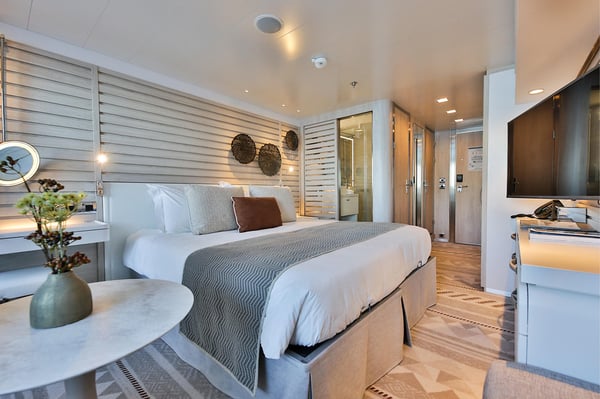
Deluxe Stateroom
Elegant and light-filled, the Deluxe Stateroom features a private balcony, queen-size bed, ensuite bathroom and refined contemporary décor, offering a comfortable and stylish retreat after days of exploration.

Amenities
- King or Twin Configuration
- Shower
- Toiletries Provided
- Room Service Available
- TV
- Free Wi-Fi
- Safe
- Hair Dryer
- Telephone
- Lounge Area
- Vanity Area
- Free Mini Bar
- Media/Entertainment Station
- Pillow Menu Available
- Desk
- Coffee Machine
- Air Conditioning
Ship features
Le Dumont d’Urville blends expedition capability, elegant design and immersive onboard amenities.
- Ice-strengthened hull and expedition systems
- Blue Eye underwater lounge with panoramic portholes
- Multiple dining venues: main restaurant, casual grill and outdoors
- Panorama Lounge, Observation Deck, library and theatre
- Spa, fitness room, open-deck loungers and solarium
- Zodiac fleet, kayaking and underwater camera systems
- Open-bridge access and lecture spaces
- Sustainability features and state-of-the-art propulsion


