Iconic Capitals & Towns of the Baltic
TICKET TITLE

Ticket Title
The is an offer
 7 nights
 Le Champlain
 21 May '27
Cruise overview
At the heart of the Baltic Sea, set off to discover towns and landscapes where history and nature exist in perfect harmony. The islands and gentle charm of Helsinki reveal Art Nouveau architecture and a vibrant atmosphere. Tallinn offers medieval streets and Hanseatic fortifications, while Stockholm and the Swedish island of Gotland combine colourful houses, bustling harbours, and UNESCO World Heritage sites. In Gdansk, amber stones and Gothic treasures bring the city to life, and in Denmark, the islands of Christiansoe and Bornholm reveal unspoilt panoramas where nature meets maritime heritage. Between land and sea, harbours and fishing villages, this trip is an invitation to delve into the unique soul of the Baltic Sea and to fully experience the richness of its history and the beauty of its landscapes.
Itinerary
Helsinki
A city of the sea, Helsinki was built along a series of oddly shaped peninsulas and islands jutting into the Baltic coast along the Gulf of Finland. Streets and avenues curve around bays, bridges reach to nearby islands, and ferries ply among offshore islands.Having grown dramatically since World War II, Helsinki now absorbs more than one-tenth of the Finnish population. The metro area covers 764 square km (474 square miles) and 315 islands. Most sights, hotels, and restaurants cluster on one peninsula, forming a compact central hub. The greater Helsinki metropolitan area, which includes Espoo and Vantaa, has a total population of more than a million people.Helsinki is a relatively young city compared with other European capitals. In the 16th century, King Gustav Vasa of Sweden decided to woo trade from the Estonian city of Tallinn and thus challenge the Hanseatic League’s monopoly on Baltic trade. Accordingly, he commanded the people of four Finnish towns to pack up their belongings and relocate to the rapids on the River Vantaa. The new town, founded on June 12, 1550, was named Helsinki.For three centuries, Helsinki (Helsingfors in Swedish) had its ups and downs as a trading town. Turku, to the west, remained Finland’s capital and intellectual center. However, Helsinki’s fortunes improved when Finland fell under Russian rule as an autonomous grand duchy. Czar Alexander I wanted Finland’s political center closer to Russia and, in 1812, selected Helsinki as the new capital. Shortly afterward, Turku suffered a disastrous fire, forcing the university to move to Helsinki. The town’s future was secure.Just before the czar’s proclamation, a fire destroyed many of Helsinki’s traditional wooden structures, precipitating the construction of new buildings suitable for a nation’s capital. The German-born architect Carl Ludvig Engel was commissioned to rebuild the city, and as a result, Helsinki has some of the purest neoclassical architecture in the world. Add to this foundation the influence of Stockholm and St. Petersburg with the local inspiration of 20th-century Finnish design, and the result is a European capital city that is as architecturally eye-catching as it is distinct from other Scandinavian capitals. You are bound to discover endless engaging details—a grimacing gargoyle; a foursome of males supporting a balcony’s weight on their shoulders; a building painted in striking colors with contrasting flowers in the windows. The city’s 400 or so parks make it particularly inviting in summer.Today, Helsinki is still a meeting point of eastern and western Europe, which is reflected in its cosmopolitan image, the influx of Russians and Estonians, and generally multilingual population. Outdoor summer bars (“terrassit” as the locals call them) and cafés in the city center are perfect for people watching on a summer afternoon.
Read More
Tallinn
Stockholm
Stockholm
Visby
Gdansk
Christiansø
Copenhagen
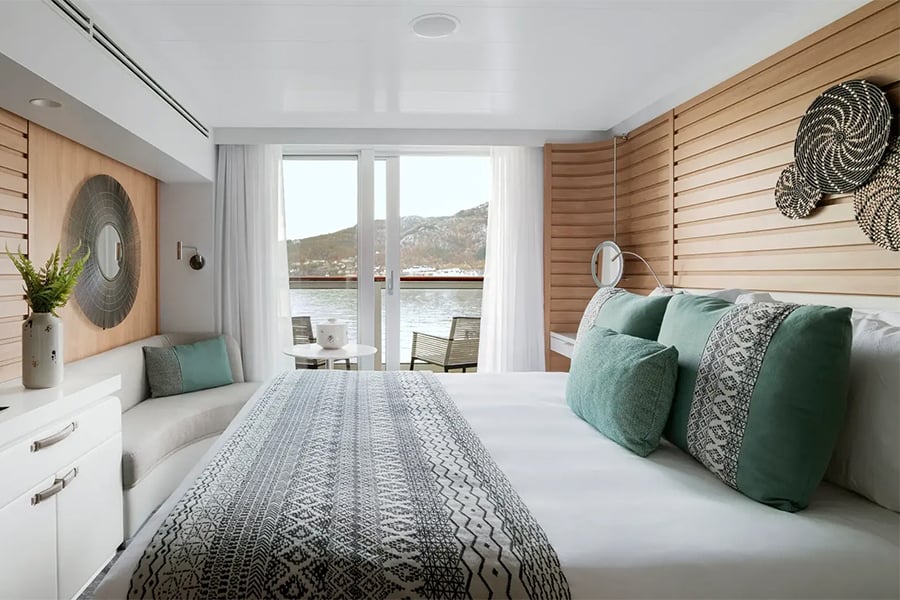
Deluxe Stateroom
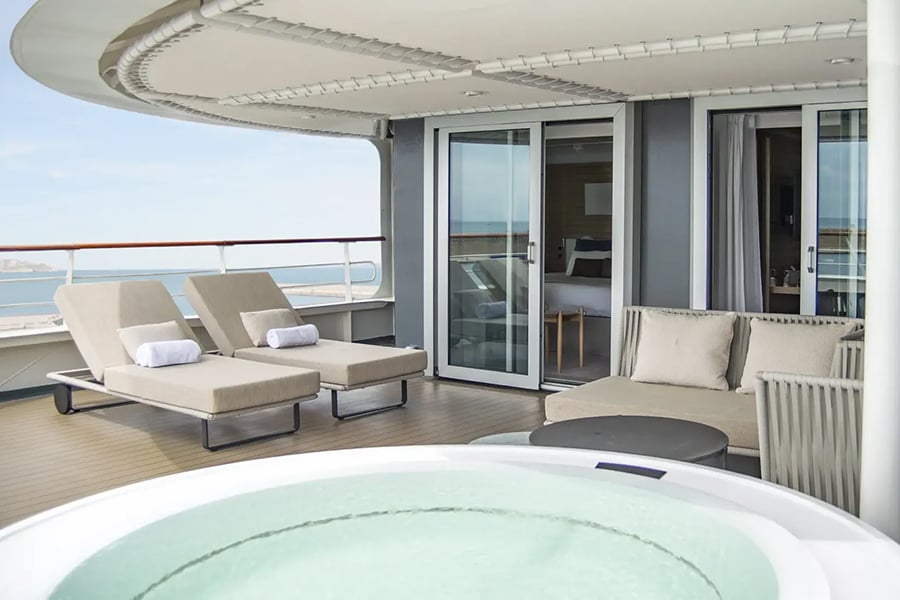
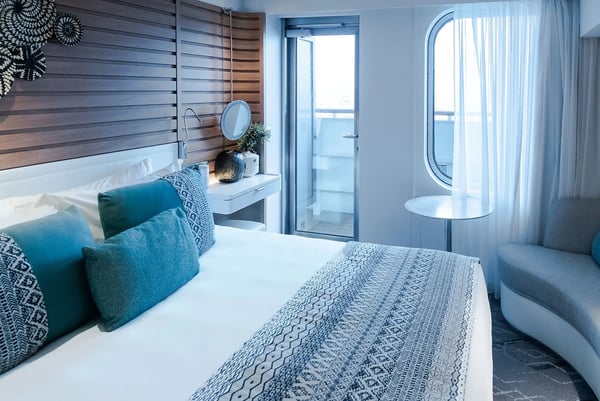
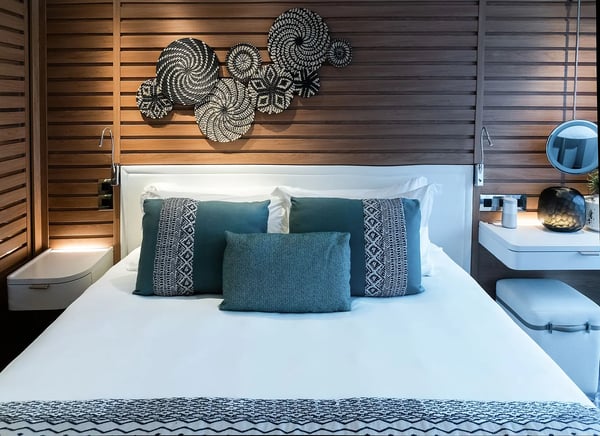
Elegant and light-filled, the Deluxe Stateroom features a private balcony, queen-size bed, ensuite bathroom and refined contemporary décor, offering a comfortable and stylish retreat after days of exploration.

Amenities
- King or Twin Configuration
- Lounge Area
- Vanity Area
- Shower
- Toiletries Provided
- Room Service Available
- Free Mini Bar
- TV
- Free Wi-Fi
- Media/Entertainment Station
- Safe
- Hair Dryer
- Pillow Menu Available
- Telephone
- Desk
- Butler Service
- Coffee Machine
- Air Conditioning
Ship features
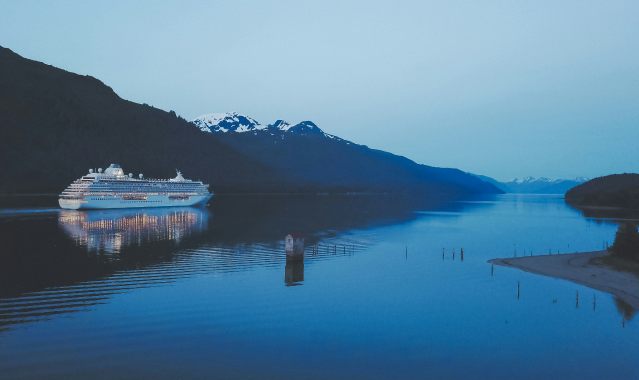
Le Champlain blends discreet elegance with advanced expedition features and immersive guest spaces.
- All-suite and stateroom configuration with private balconies
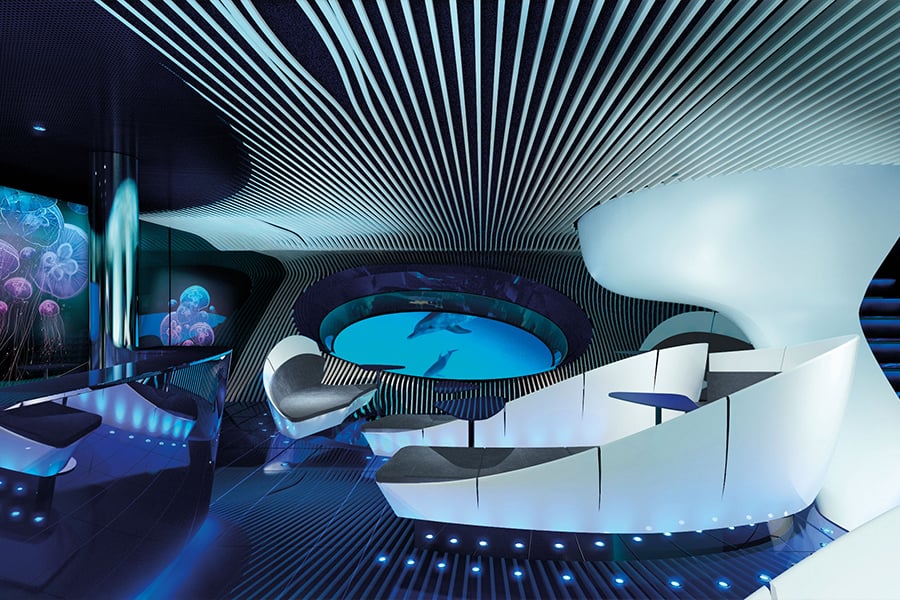
- Blue Eye — underwater lounge with glass portholes and hydrophone sound system
- Infinity pool with counter-current system
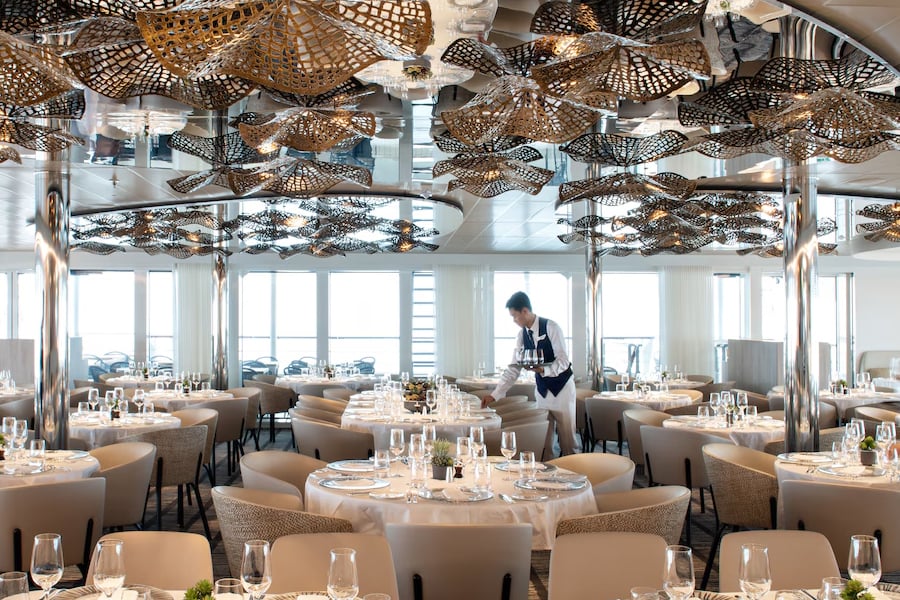
- Two restaurants: Le Nautilus (main) and Le Nemo (grill)
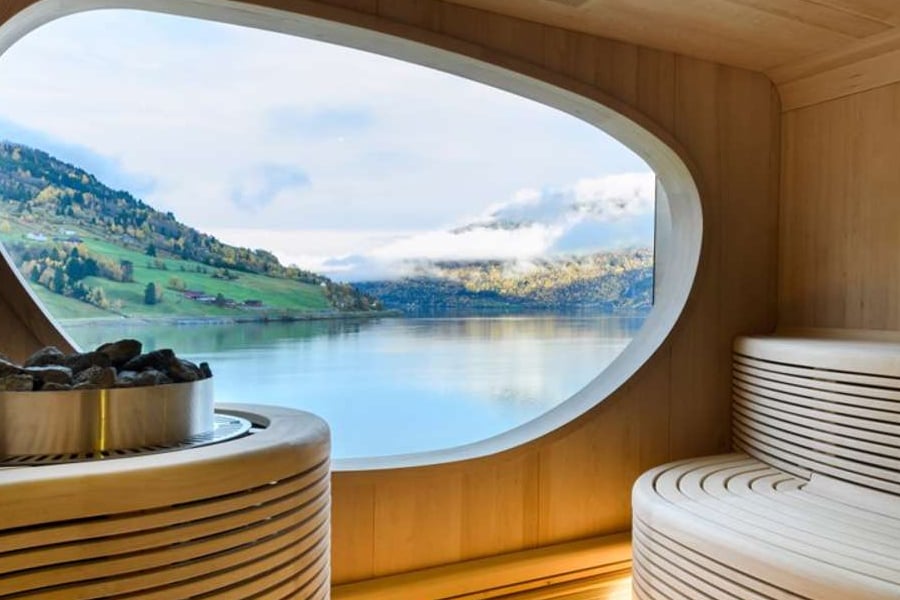
- Spa / Wellness area with treatment rooms, sauna and gym
- Panoramic lounge, observation terrace and live entertainment
- Open-deck promenades and a marina platform for water access
- 24-hour room service, inclusive Wi-Fi and wellness classes