- Home>
- Cruise Lines>
- National Geographic - Lindblad Expeditions>
- National Geographic Resolution>
- Japan’s Western Shores: Ancient Traditions and Natural Beauty
Japan’s Western Shores: Ancient Traditions and Natural Beauty, 28 June 2027
SAVE UP TO £2,000PP

Save up to £2,000pp
Book this voyage with us by 4 November 2026 and enjoy £2,000 per person savings.
 15 nights
 National Geographic Resolution
 28 Jun '27
Cruise overview
Exploring the storied waters between Japan and Korea reveals coastlines shaped by ancient kingdoms, maritime trade and deeply layered cultural traditions. This voyage brings you into places where spiritual rituals, everyday craftsmanship and coastal life remain closely tied to the land—whether in mountain-ringed northern villages or along quiet rural shores. With unhurried time in small ports, you’ll meet local experts, witness heritage in its authentic context and gain a deeper understanding of how these communities have evolved at the edge of sea and sky.
Itinerary
Osaka
Arrive in Osaka and transfer to your hotel.
From Minami’s neon-lighted Dotombori and historic Tenno-ji to the high-rise class and underground shopping labyrinths of Kita, Osaka is a city that pulses with its own unique rhythm. Though Osaka has no shortage of tourist sites, it is the city itself that is the greatest attraction. Home to some of Japan’s best food, most unique fashions, and warmest locals, Osaka does not beg to be explored—it demands it. More than anywhere else in Japan, it rewards the impulsive turn down an interesting side street or the chat with a random stranger. People do not come here to see the city, they come to experience it.Excluded from the formal circles of power and aristocratic culture in 16th-century Edo (Tokyo), Osaka took advantage of its position as Japan’s trading center, developing its own art forms such as Bunraku puppet theater and Rakugo comic storytelling. It was in Osaka that feudal Japan’s famed Floating World—the dining, theater, and pleasure district—was at its strongest and most inventive. Wealthy merchants and common laborers alike squandered fortunes on culinary delights, turning Osaka into “Japan’s Kitchen,” a moniker the city still has today. Though the city suffered a blow when the Meiji government canceled all of the samurai class’s outstanding debts to the merchants, it was quick to recover. At the turn of the 20th century, it had become Japan’s largest and most prosperous city, a center of commerce and manufacturing.Today Osaka remains Japan’s iconoclastic metropolis, refusing to fit Tokyo’s norms and expectations. Unlike the hordes of Tokyo, Osakans are fiercely independent. As a contrast to the neon and concrete surroundings, the people of Osaka are known as Japan’s friendliest and most outgoing. Ask someone on the street for directions in Tokyo and you are lucky to get so much as a glance. Ask someone in Osaka and you get a conversation.The main areas of the city, Kita (north) and Minami (south), are divided by two rivers: the Dojima-gawa and the Tosabori-gawa. Between Kita and Minami is Naka-no-shima, an island and the municipal center of Osaka. Kita (north of Chuo Dori) is Osaka’s economic hub and contains Osaka’s largest stations: JR Osaka and Hankyu Umeda. The area is crammed with shops, department stores, and restaurants. Nearby are a nightlife district, Kita-shinchi; Naka-no-shima and the Museum of Oriental Ceramics; Osaka-jo (Osaka Castle); and Osaka Koen (Osaka Park). Restaurants, bars, department stores, and boutiques attract Osaka’s youth to Minami (south Chuo Dori); theatergoers head to the National Bunraku Theatre and electronics-lovers to Den Den Town. For a glimpse of old Osaka, visit Tenno-ji Temple and Shin Sekai. The main stations are Namba, Shin-sai-bashi, Namba Nankai, and Tenno-ji. There’s easy access to the Municipal Museum of Fine Art and Sumiyoshi Taisha (Sumiyoshi Grand Shrine).The bay area, to the west of the city center, is home to the Osaka Aquarium and Universal Studios Japan. The Shinkansen stops at Shin-Osaka, three stops (about five minutes) north of Osaka Station on the Mido-suji subway line. To the north of Shin-Osaka is Senri Expo Park.
Read More
Osaka
Mitarai
Itsukushima
Moji-ku, Kitakyūshū
Busan
Matsue
Kanazawa
Toyama
Sado
Niigata
Sakata
Aomori
Southern Hokkaido Island
Otaru
Otaru
Category 1 - Fore Deck
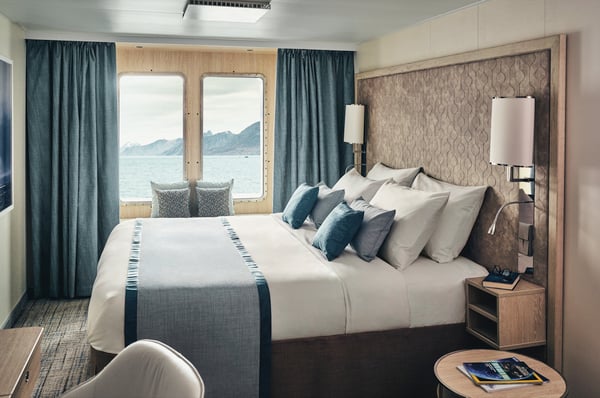
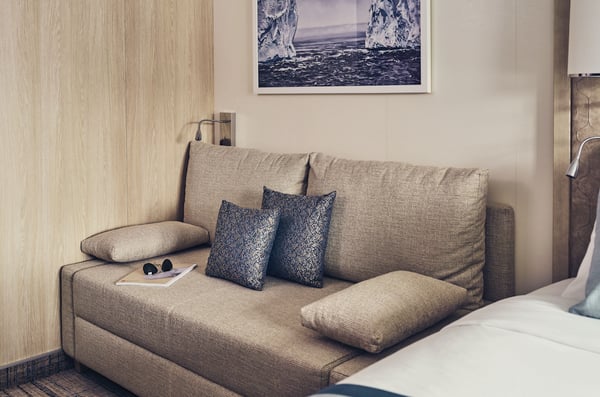
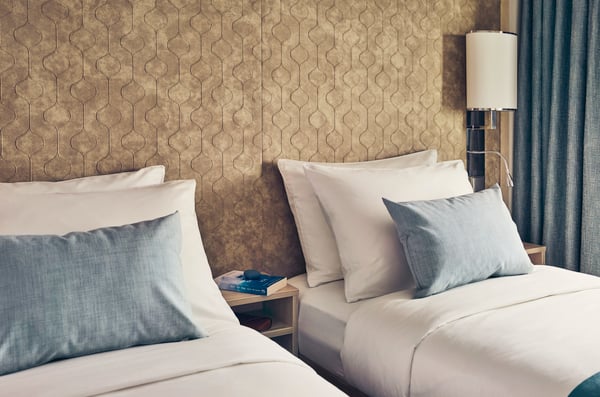
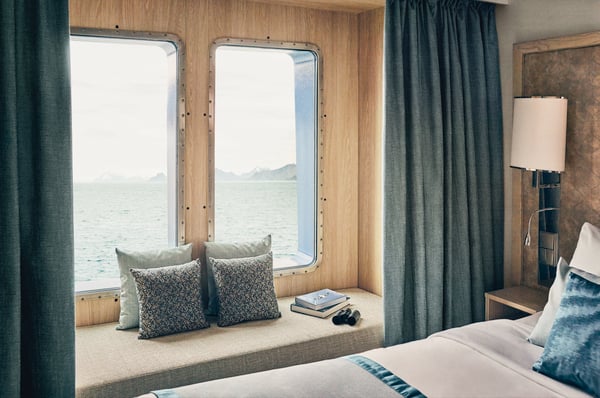
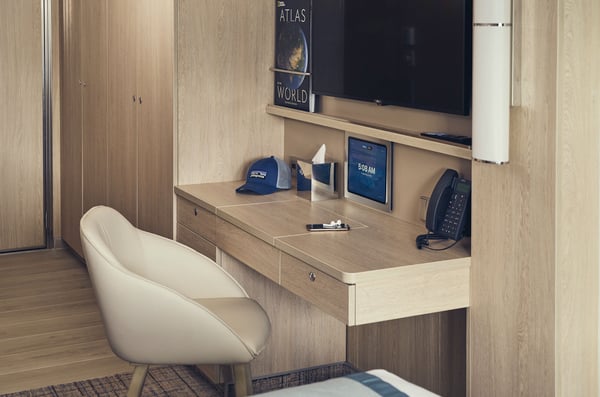
#404, 406, 408, 411, 413, 415 — Cabin with two large windows, two singles that can convert to a queen, writing desk and chair, two bedside tables, window sofa, coffee table, and a closet.
Amenities
- Queen or Twin Configuration
- Safe
- Hair Dryer
- Telephone
- Desk
Ship features
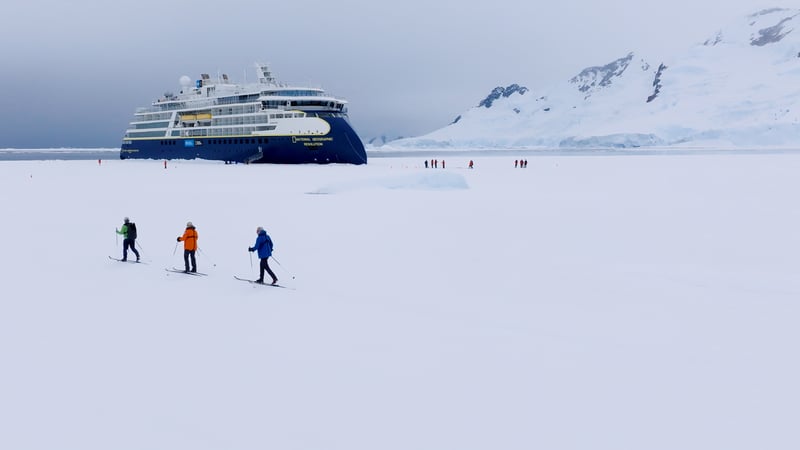
A revolutionary polar expedition vessel offering luxury, stability and immersive exploration in the world’s most extreme environments.
- Carries just 126 guests for an intimate expedition experience
- Polar Class 5 ice-strengthened hull and X-Bow® design for smoother sailing
- Panoramic Observation Lounge with floor-to-ceiling windows
- Spacious all-outside cabins, most with balconies
- Expert expedition team of naturalists, historians and photographers
- Dedicated science hub and undersea exploration programme
- Multiple dining venues serving regionally inspired cuisine
- Two infinity-style hot tubs and a glass-walled sauna
- Wellness centre, yoga studio and gym
- Operates worldwide in Antarctica, Arctic and subpolar regions