Ancient Mediterranean: Exploring Greece, Croatia and Albania

 7 nights
 National Geographic Orion
 20 May '27
Cruise overview
The experts at Food & Wine magazine and National Geographic-Lindblad Expeditions have come together to create this immersive exploration of the Dalmatian Coast’s sun-soaked beaches, charming port towns, rich maritime history, and eclectic cuisine. Sail between Greece, Albania, and Croatia, delving into ancient empires and their archaeological treasures and visiting fascinating UNESCO World Heritage sites, from Delphi to Dubrovnik. Soak in the Ionian Sea’s idyllic turquoise waters, and encounter the region’s lesser-known gems, including outlying Croatian isles and vestiges of antiquity in Albania. A top team of naturalists—including experts on history and culture—will illuminate all we see, and a wine expert will guide us through tastings of some of the region’s best wines, each personally selected by Food & Wine magazine’s Executive Wine Editor, Ray Isle.
Itinerary
Zadar
Dalmatia’s capital for more than 1,000 years, Zadar is all too often passed over by travelers on their way to Split or Dubrovnik. What they miss out on is a city of more than 73,000 that is remarkably lovely and lively despite—and, in some measure, because of—its tumultuous history. The Old Town, separated from the rest of the city on a peninsula some 4 km (2½ miles) long and just 1,640 feet wide, is bustling and beautiful: the marble pedestrian streets are replete with Roman ruins, medieval churches, palaces, museums, archives, and libraries. Parts of the new town are comparatively dreary, a testament to what a world war followed by decades of communism, not to mention a civil war, can do to the architecture of a city that is 3,000 years old. A settlement had already existed on the site of the present-day city for some 2,000 years when Rome finally conquered Zadar in the 1st century BC; the foundations of the forum can be seen today. Before the Romans came the Liburnians had made it a key center for trade with the Greeks and Romans for 800 years. In the 3rd century BC the Romans began to seriously pester the Liburnians, but required two centuries to bring the area under their control. During the Byzantine era, Zadar became the capital of Dalmatia, and this period saw the construction of its most famous church, the 9th-century St. Donat’s Basilica. It remained the region’s foremost city through the ensuing centuries. The city then experienced successive onslaughts and occupations—both long and short—by the Osogoths, the Croatian-Hungarian kings, the Venetians, the Turks, the Habsburgs, the French, the Habsburgs again, and finally the Italians before becoming part of Yugoslavia and, in 1991, the independent republic of Croatia. Zadar was for centuries an Italian-speaking city, and Italian is still spoken widely, especially by older people. Indeed, it was ceded to Italy in 1921 under the Treaty of Rapallo (and reverted to its Italian name of Zara). Its occupation by the Germans from 1943 led to intense bombing by the Allies during World War II, which left most of the city in ruins. Zadar became part of Tito’s Yugoslavia in 1947, prompting many Italian residents to leave. Zadar’s most recent ravages occurred during a three-month siege by Serb forces and months more of bombardment during the Croatian-Serbian war between 1991 and 1995. But you’d be hard-pressed to find outward signs of this today in what is a city to behold. There are helpful interpretive signs in English all around the Old Town, so you certainly won’t feel lost when trying to make sense of the wide variety of architectural sites you might otherwise pass by with only a cursory look.
Read More
Komiza
Dubrovnik
Krujë
Corfu
Cephalonia
Corinth Canal
Athens
Category 2 - Main Deck
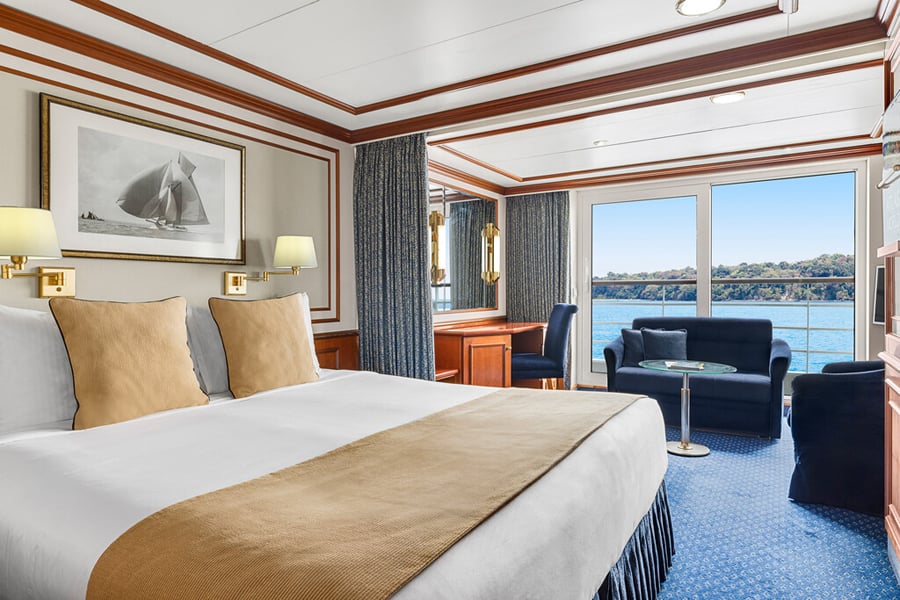
#302-312, 314, 315, 317 — Cabins feature an oval window and configurable beds, consisting of two single beds that can be converted into a queen bed. An armchair, reading lamps, a flat screen TV, a bedside table, a coffee table, a desk, and climate controls complete the amenities. Marble bathrooms are generously sized and include a spacious shower stall with a glass door.

Amenities
- Twin
- Lounge Area
- Vanity Area
- TV
- Safe
- Hair Dryer
- Telephone
- Desk
- Air Conditioning
Ship features
National Geographic Orion combines the elegance of small-ship cruising with the innovation of a modern expedition vessel.
- 102-guest capacity for an intimate, personalised voyage
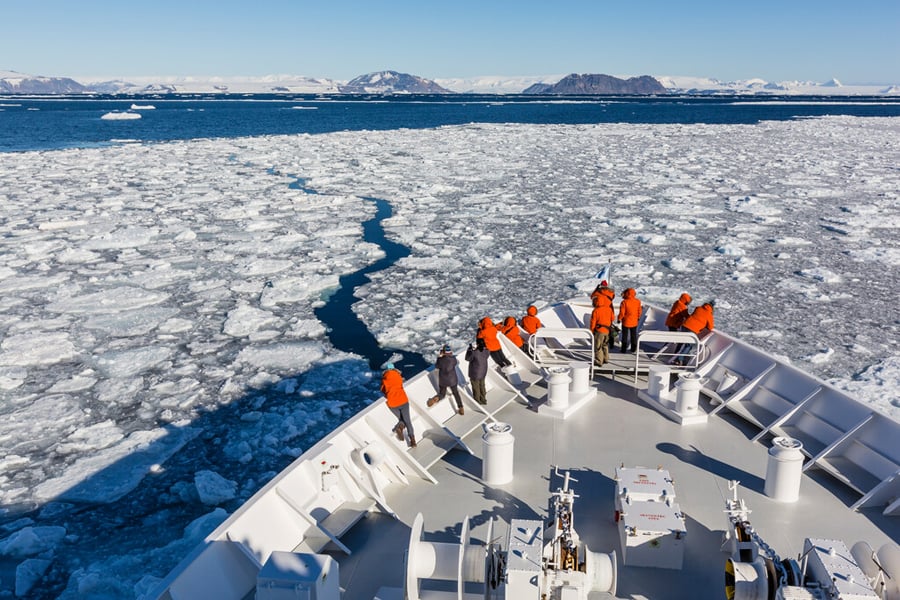
- Ice-strengthened hull for safe polar navigation
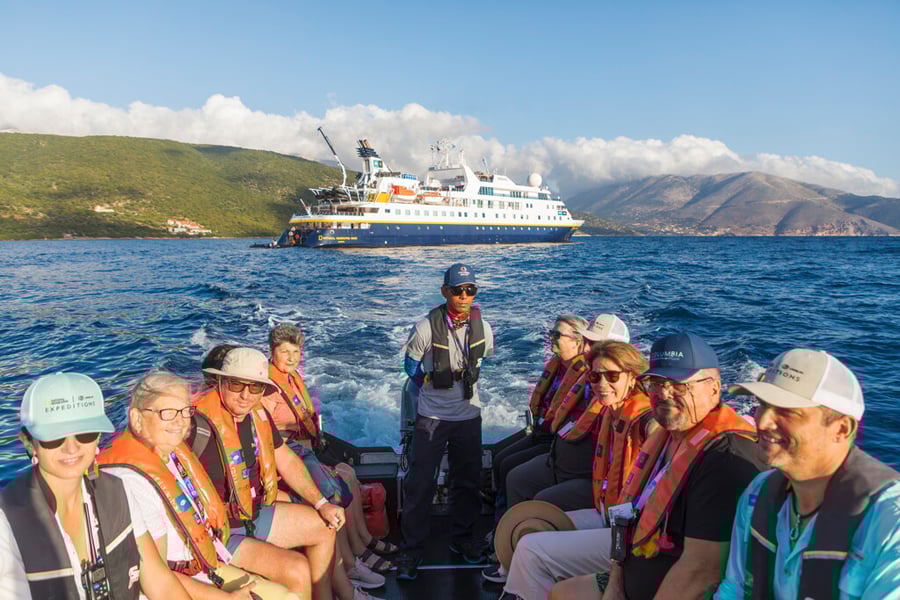
- Fleet of Zodiacs, kayaks, and a remote-operated vehicle (ROV)
- All outward-facing staterooms, many with French balconies
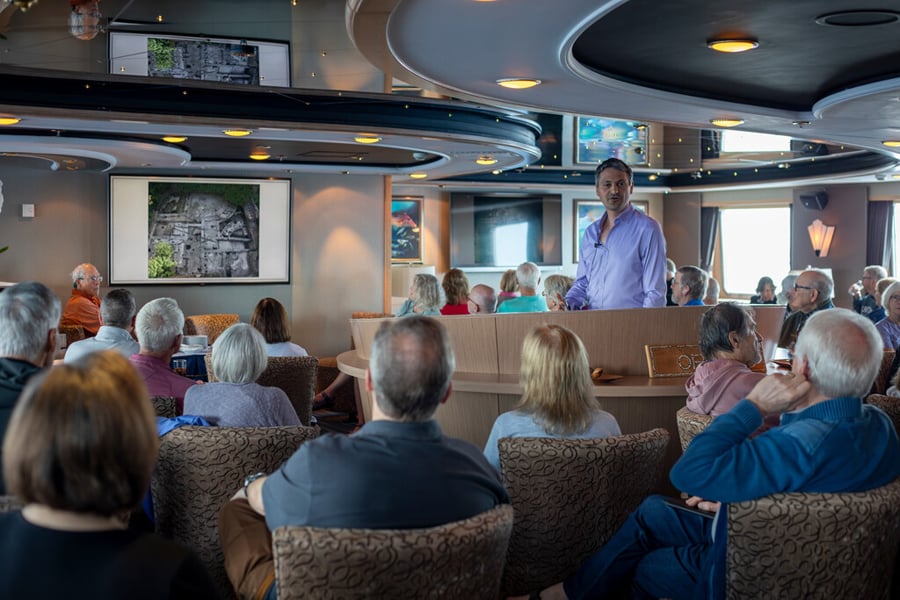
- Lounge and theatre for lectures and briefings
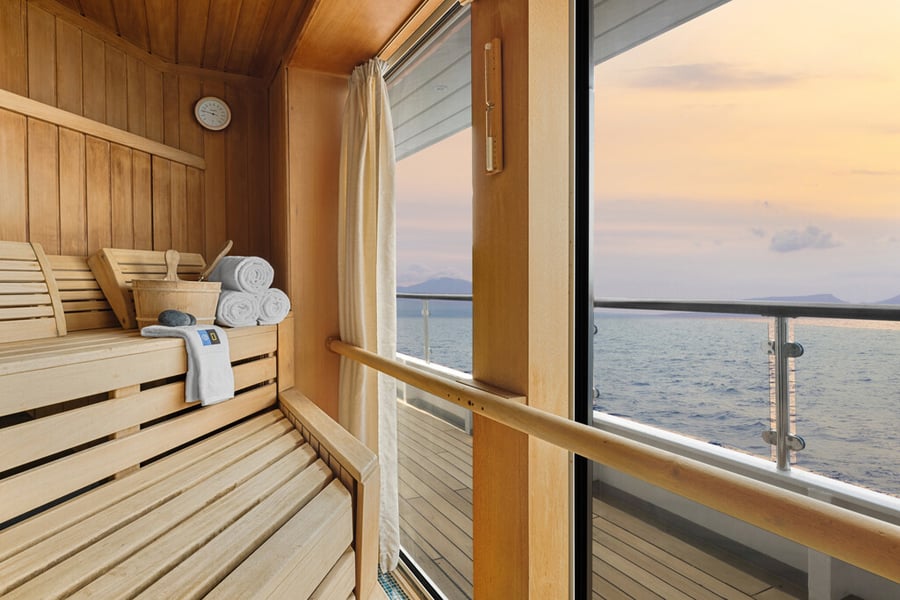
- Spa, fitness centre, and library onboard
- Expedition tools and photography equipment
- Expert-led landings, hikes, and snorkelling excursions
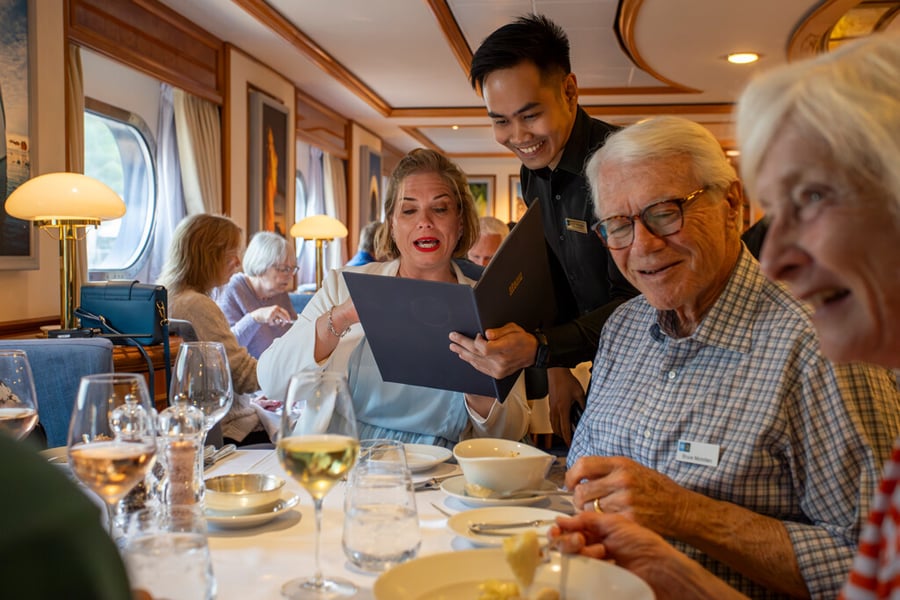
- Dining inspired by regional ingredients and sustainability
- National Geographic experts and photo instructors on every voyage