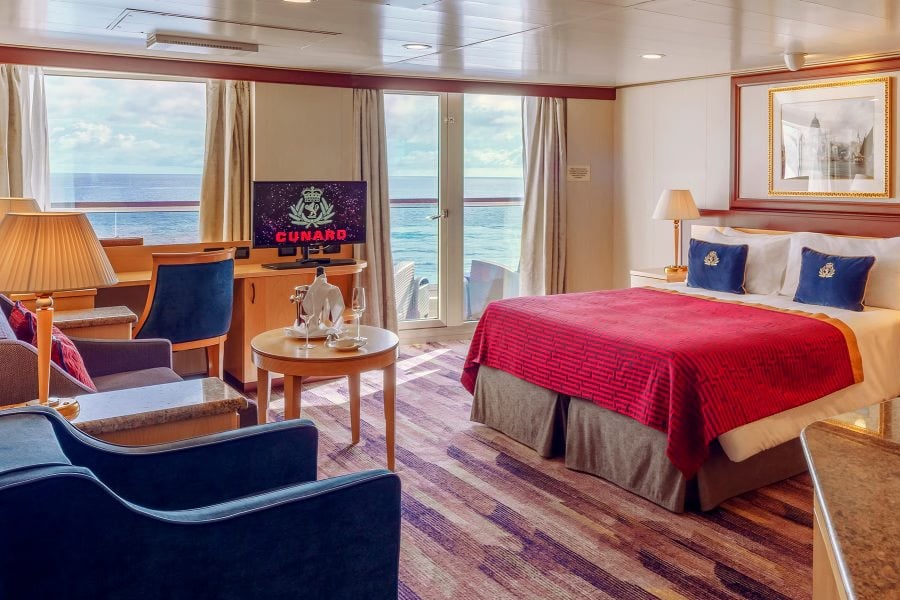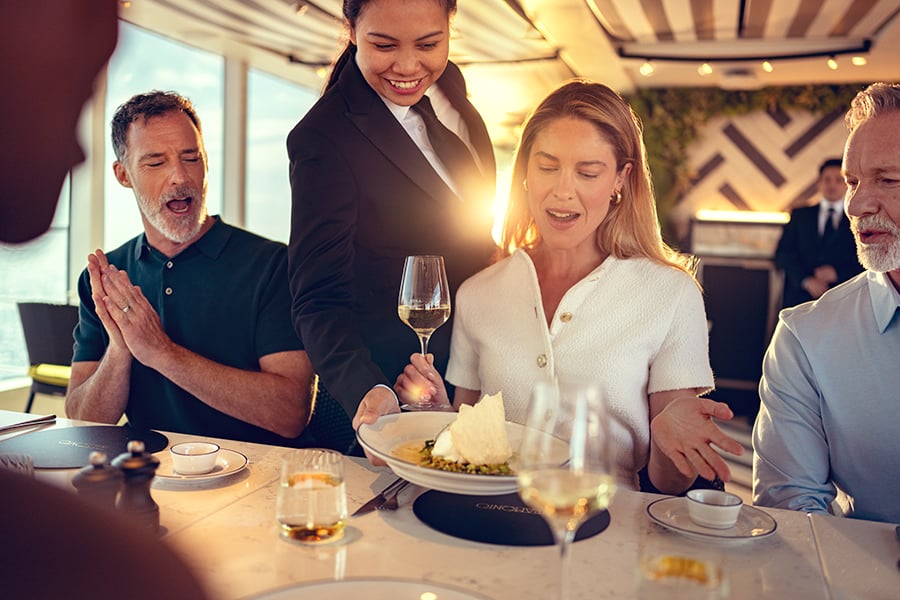
Britannia Standard Inside Staterooms provide a peaceful haven of comfort and style, thoughtfully designed for a restful voyage. Each features a king-size Cunard bed, an elegant sitting area and a well-appointed bathroom with Penhaligon’s toiletries. With attentive steward service and refined dining in the Britannia Restaurant, every detail ensures a truly relaxing experience at sea.
Yokohama To Southampton

Dining
from£7,699pp
from£7,699pp
Voyage Code: V1047218022376
 61 nights
 Queen Elizabeth
 9 Mar '28
Cruise overview
Yokohama
Rabaul, Bismarck Archipelago
Cairns, Queensland
Airlie Beach
Sydney, New South Wales
Sydney, New South Wales
Nuku'alofa
Honolulu, Hawaii
Honolulu, Hawaii
Hilo, Hawaii
Los Angeles, California
Cabo San Lucas
Puntarenas
Aruba
Miami, Florida
Port Canaveral, Florida
Ponta Delgada, Azores
Southampton
Itinerary
Day 1
Yokohama
In 1853, a fleet of four American warships under Commodore Matthew Perry sailed into the bay of Tokyo (then Edo) and presented the reluctant Japanese with the demands of the U.S. government for the opening of diplomatic and commercial relations. The following year Perry returned and first set foot on Japanese soil at Yokohama—then a small fishing village on the mudflats of Tokyo bay. Two years later New York businessman Townsend Harris became America’s first diplomatic representative to Japan. In 1858 he was finally able to negotiate a commercial treaty between the two countries; part of the deal designated four locations—one of them Yokohama—as treaty ports. In 1859 the shogunate created a special settlement in Yokohama for the growing community of merchants, traders, missionaries, and other assorted adventurers drawn to this exotic new land of opportunity. The foreigners (predominantly Chinese and British, plus a few French, Americans, and Dutch) were confined here to a guarded compound about 5 square km (2 square miles)—placed, in effect, in isolation—but not for long. Within a few short years the shogunal government collapsed, and Japan began to modernize. Western ideas were welcomed, as were Western goods, and the little treaty port became Japan’s principal gateway to the outside world. In 1872 Japan’s first railway was built, linking Yokohama and Tokyo. In 1889 Yokohama became a city; by then the population had grown to some 120,000. As the city prospered, so did the international community and by the early 1900s Yokohama was the busiest and most modern center of international trade in all of East Asia. Then Yokohama came tumbling down. On September 1, 1923, the Great Kanto Earthquake devastated the city. The ensuing fires destroyed some 60,000 homes and took more than 40,000 lives. During the six years it took to rebuild the city, many foreign businesses took up quarters elsewhere, primarily in Kobe and Osaka, and did not return. Over the next 20 years Yokohama continued to grow as an industrial center—until May 29, 1945, when in a span of four hours, some 500 American B-29 bombers leveled nearly half the city and left more than half a million people homeless. When the war ended, what remained became—in effect—the center of the Allied occupation. General Douglas MacArthur set up headquarters here, briefly, before moving to Tokyo; the entire port facility and about a quarter of the city remained in the hands of the U.S. military throughout the 1950s. By the 1970s Yokohama was once more rising from the debris; in 1978 it surpassed Osaka as the nation’s second-largest city, and the population is now inching up to the 3.5 million mark. Boosted by Japan’s postwar economic miracle, Yokohama has extended its urban sprawl north to Tokyo and south to Kamakura—in the process creating a whole new subcenter around the Shinkansen Station at Shin-Yokohama. The development of air travel and the competition from other ports have changed the city’s role in Japan’s economy. The great liners that once docked at Yokohama’s piers are now but a memory, kept alive by a museum ship and the occasional visit of a luxury vessel on a Pacific cruise. Modern Large as Yokohama is, the central area is very negotiable. As with any other port city, much of what it has to offer centers on the waterfront—in this case, on the west side of Tokyo Bay. The downtown area is called Kannai (literally, “within the checkpoint”); this is where the international community was originally confined by the shogunate. Though the center of interest has expanded to include the waterfront and Ishikawa-cho, to the south, Kannai remains the heart of town. Think of that heart as two adjacent areas. One is the old district of Kannai, bounded by Basha-michi on the northwest and Nippon-odori on the southeast, the Keihin Tohoku Line tracks on the southwest, and the waterfront on the northeast. This area contains the business offices of modern Yokohama. The other area extends southeast from Nippon-odori to the Moto-machi shopping street and the International Cemetery, bordered by Yamashita Koen and the waterfront to the northeast; in the center is Chinatown, with Ishikawa-cho Station to the southwest. This is the most interesting part of town for tourists. Whether you’re coming from Tokyo, Nagoya, or Kamakura, make Ishikawa-cho Station your starting point. Take the South Exit from the station and head in the direction of the waterfront.
Read More
Day 2
 At sea
Day 3
At sea
Day 4
At sea
Day 5
At sea
Day 6
At sea
Day 7
At sea
Day 8
Rabaul, Bismarck Archipelago
Day 9
At sea
Day 10
At sea
Day 11
At sea
Day 12
Cairns, Queensland
Day 13
Airlie Beach
Day 14
At sea
Day 15
At sea
Day 16
Sydney, New South Wales
Day 17
Sydney, New South Wales
Day 18
At sea
Day 19
At sea
Day 20
At sea
Day 21
At sea
Day 22
Nuku'alofa
Day 23
At sea
Day 24
At sea
Day 25
At sea
Day 26
At sea
Day 27
At sea
Day 28
Honolulu, Hawaii
Day 29
Honolulu, Hawaii
Day 30
Hilo, Hawaii
Day 31
At sea
Day 32
At sea
Day 33
At sea
Day 34
At sea
Day 35
At sea
Day 36
Los Angeles, California
Day 37
At sea
Day 38
At sea
Day 39
Cabo San Lucas
Day 40
At sea
Day 41
At sea
Day 42
At sea
Day 43
Puntarenas
Day 44
At sea
Day 45
Panama Canal Full Transit
Day 46
At sea
Day 47
Aruba
Day 48
At sea
Day 49
At sea
Day 50
Miami, Florida
Day 51
Port Canaveral, Florida
Day 52
At sea
Day 53
At sea
Day 54
At sea
Day 55
At sea
Day 56
At sea
Day 57
At sea
Day 58
Ponta Delgada, Azores
Day 59
At sea
Day 60
At sea
Day 61
At sea
Day 62
Southampton
Britannia Standard Insidefrom£7,799pp
Britannia Deluxe Insidefrom£8,899pp
Britannia Oceanview (Obstructed View) from£9,299pp
Britannia Oceanviewfrom£10,199pp
Britannia Balcony (Obstructed View)from£11,699pp
Britannia Single Insidefrom£12,299pp
Britannia Balconyfrom£13,999pp
Britannia Single Oceanviewfrom£14,599pp
Queens Grill Grand SuiteCall for price
Queens Grill Master SuiteCall for price
Queens Grill PenthouseCall for price
Queens Grill SuiteCall for price
Princess Grill SuiteCall for price
Britannia Club Balcony Call for price

Amenities
- Vanity Area
- King or Twin Configuration
- Shower
- Toiletries Provided
- Room Service Available
- TV
- Mini Bar (Additional Cost)
- Coffee Machine
- Desk
Ship features
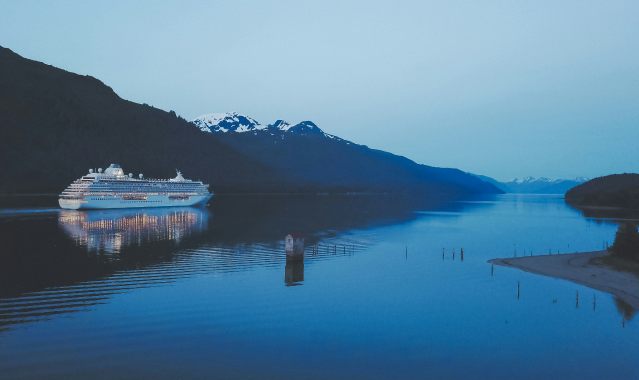
Queen Elizabeth celebrates Cunard’s rich heritage through elegant design, exceptional service, and a programme of immersive voyages that span the globe.
- 2,081-guest mid-sized ocean liner
- Built in 2010 with art deco-inspired interiors
- Six accommodation categories
- Main, Grill, and speciality restaurants
- Mareel Spa with thermal suite and salon
- Royal Court Theatre and Yacht Club
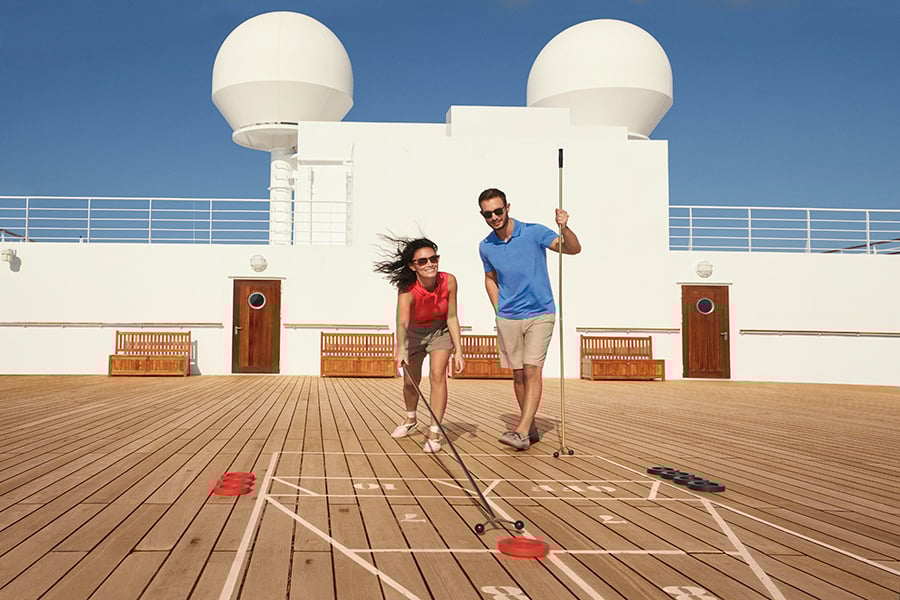
- Multiple pools and sports deck
- Golden Lion Pub and Commodore Club
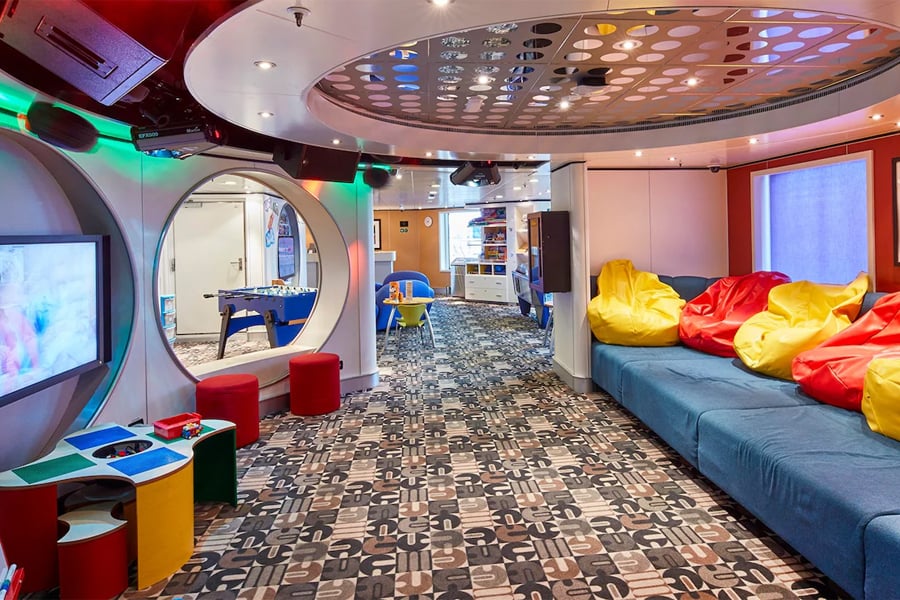
- Children’s Play Zone and family activities
- World-class service from Cunard’s White Star crew